
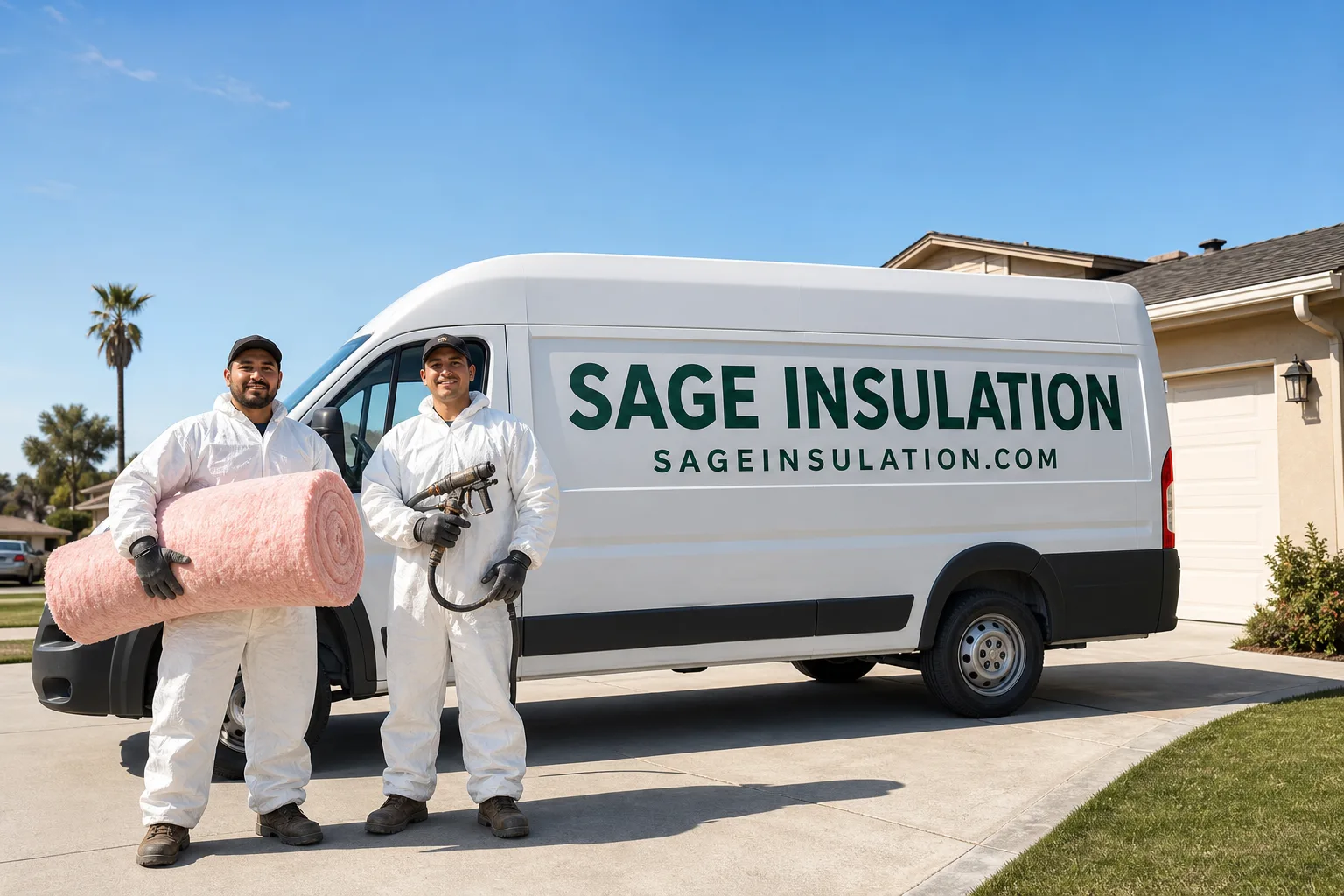
Fast, Reliable Attic Insulation Across Del Aire
Attic insulation in Del Aire costs between $1,400 and $4,800 for most single-family homes, depending on whether you’re topping up settled batts or pulling out mold-damaged material and starting fresh. Our crews reach Del Aire from our Downey yard within 90 minutes on a normal dispatch and we stock the materials that matter for this area’s fog-belt housing stock: damp-rated blown cellulose, mold-resistant mineral wool, and rigid baffles sized for shallow-pitch low-slope roofs. Call Alan Herrera’s team at (855) 360-9333 and we’ll send someone out to look at what’s actually happening above your ceiling, not just quote you over the phone.
Why Sage Insulation Is Del Aire’s Preferred Attic Insulation Company
Del Aire is a small unincorporated pocket of LA County, but it has one of the most specific attic insulation problems in the whole South Bay. Homes here sit directly under the marine layer and next to the LAX flight path. The same vents that were supposed to keep attics cool pull in fog-laden air all spring and early summer. Most insulation contractors from outside the area don’t know what that means. We do because we’ve crawled through enough Del Aire attics to see what happens: batts go damp, they compress, they grow things, and by the time a homeowner notices the smell or the upstairs bedroom won’t cool down, the original R-value is half what it was.
Sage Insulation is material-agnostic, which in Del Aire means something specific. We’re not locked into selling you one product line. We carry Owens Corning and Knauf batt systems, Rockwool mineral wool, and GreenFiber blown cellulose, and we’ll match whichever one actually performs in your attic’s moisture and heat profile. If that means dense-packed cellulose with baffled soffit vents rather than yet another fiberglass batt, that’s what we recommend. Alan Herrera built the company around that kind of honesty. It’s the reason Del Aire homeowners keep our number.
When you call, you get us, not a call center. We answer, we schedule, and we show up when we say we will. For Del Aire addresses in the 90251 ZIP, same-week appointments are usually available and we can often get to emergency insulation failures, like a ceiling leak that soaked your attic batts, within 24 hours.
Attic Mold Removal in Del Aire
Attic mold removal in Del Aire is a job we see constantly because of the way fog-belt air moves through low-slope attics near the El Segundo and Manhattan Beach border. The first sentence any Del Aire homeowner should read is this: if your attic smells musty in the morning and clearer by afternoon, you likely have condensation-fed mold on the underside of your roof sheathing, and it will not go away on its own. Remediation typically runs $1,200 to $3,500 in Del Aire depending on square footage and whether the mold has reached the roof deck or is still surface-level on insulation and framing.
What the job involves is more than spraying something and hoping. We isolate the attic space, remove the affected insulation, treat the sheathing with a peroxide-based antimicrobial that actually kills the spores rather than just bleaching them, and then we address why the moisture got in. In Del Aire that almost always means undersized or blocked soffit vents and missing baffles. If you skip the ventilation correction, the mold returns next fog season. Call (855) 360-9333 if you’ve noticed that telltale damp-attic smell.
Surface Treatment Versus Full Removal
Some Del Aire attics have light surface growth on the sheathing only, and that can be treated in place after the insulation is pulled. That runs on the lower end of the range. When mold has penetrated plywood or the insulation itself is saturated, you’re looking at full removal and disposal, which adds haul-off costs and more labor hours.
What Happens After Treatment
Post-remediation, the attic needs time to dry before new insulation goes in. We typically install new baffles and verify airflow on the same visit, then return within a few days to blow in new material once moisture readings on the deck come down. Leading with dry-out first is the difference between a permanent fix and a recurring problem in Del Aire’s damp air.
Attic Insulation Removal in Del Aire
Attic insulation removal in Del Aire is the starting point for almost every home built in the 1950s and 1960s that hasn’t had a retrofit yet. The original batts in these low-slung tract homes off Aviation Boulevard and surrounding streets have been settling for sixty-plus years. In Del Aire’s moist coastal air, that settled insulation isn’t just losing R-value, it’s holding moisture like a sponge. Removal typically costs $800 to $2,200 for a standard attic, more if there’s rodent activity, mold, or vermiculite that needs special handling.
The home that tells the Del Aire story best is a low-slung mid-century tract home we worked on near the 90251 border. We pulled out settled 1950s-era batts that had gone damp and matted under a shallow-pitch roof, then treated surface mold on the sheathing and baffled the soffit vents so marine air could short-circuit up to the ridge instead of soaking the field. We laid in GreenFiber blown cellulose to an even blanket, keeping it clear of the existing eave vents. The homeowner finally stopped getting that fog-season attic smell and the hot-afternoon radiant gain through the ceiling dropped noticeably.
Legacy Batts and What They Leave Behind
Older Del Aire ceilings have narrow rafter bays that were never designed for modern R-value targets. When we remove that old material, we usually find gaps, irregular depths, and sections where insulation was never installed at all. That’s all fixable, but you can’t fix what you can’t see until the old layer is gone.
Rodent and Pest Damage Under Insulation
What we find under old insulation in Del Aire attics is often worse than the insulation itself. Rodent trails through batts, nesting material, and droppings are common in homes near the LAX corridor where landscaping and fence lines funnel small animals up into eave gaps. Removal here isn’t just about old insulation; it’s about getting a clean, sanitary deck before you put anything new in.
Trusted Brands We Service in Del Aire
Del Aire attics don’t all need the same material. A low-slope roof pulling in marine air near the airport wants GreenFiber cellulose that breathes and dries without trapping moisture. A shallow rafter bay under a flat deck might do better with Rockwool mineral wool’s density and fire rating. And a standard gable-roofed garage conversion often gets Owens Corning batts for a straightforward, code-compliant retrofit. Because we stock materials from multiple manufacturers and aren’t tied to any single brand’s incentive program, the recommendation follows the house, not the other way around. We keep enough inventory in our Downey yard to serve Del Aire jobs without a two-week factory lead time.
Common Attic Insulation Problems We See in Del Aire Homes
- Fog-fed moisture in soffit-vented attics. Del Aire’s position just inland from Manhattan Beach and El Segundo means morning marine layer sits right on top of these rooftops. Soffit and eave vents designed for ventilation end up pulling that damp air in, and we routinely find saturated, compressed batts rather than the dry, dusty material you’d see further inland.
- Settled 1950s-era batts in shallow cavities. The post-WWII tract stock in Del Aire was built with thin ceiling joists and minimal insulation depth. Six or seven decades later, that material has compressed to the point where it’s doing very little, especially along exterior walls where it matters most.
- Santa Ana heat spikes through degraded attic floors. When the Santa Anas blow through, Del Aire goes from coastal mild to suddenly hot and bone-dry in a few hours. A low-slope roof already running warm transfers that radiant heat straight through a poorly insulated ceiling, and rooms that face west on Isis Avenue or Grevillea Avenue become noticeably hotter than the rest of the house.
- Mold growth under unvented or blocked eave lines. Homes near the LAX flight path and the El Segundo border often have soffit vents that were never baffled or have been painted over, blocked by leaf debris, or closed off during a past re-roof. In Del Aire’s damp air, a blocked vent isn’t neutral; it’s actively creating the conditions for surface mold on the roof deck.
Pricing for Attic Insulation in Del Aire, CA
A full attic insulation replacement in Del Aire, including removal of old material and disposal, runs between $2,800 and $6,500 for a typical 1,000 to 1,500 square foot attic. A simple blown-in top-up over existing dry batts starts around $1,400 and goes up with depth. Attic mold removal, as covered above, sits at $1,200 to $3,500 depending on severity. What moves the number is mostly attic accessibility, how much old material needs to come out, and whether the ventilation system needs baffles and corrections before we can call it done. Free estimates are always free. We’ll crawl up, measure, take moisture readings if the season calls for it, and give you a written number. Call (855) 360-9333 and we’ll schedule a time that works for your day.
We Also Serve Cities Near Del Aire
Sage Insulation works throughout the South Bay and the airport corridor. Along with Attic Insulation in Del Aire, our crews regularly handle attic jobs in Hawthorne, Inglewood, Lennox, and Lawndale. If you’re on the border or just across the 405, you’re still in our service area.
Serving Del Aire, CA — Our Local Coverage Area
We’re based in the Del Aire area and know this community well. Use the map below to see our service coverage — if you’re nearby, we can almost certainly help.
FAQs About Attic Insulation in Del Aire
Your attic insulation is wet because Del Aire’s marine layer pushes damp air straight into your attic through soffit and eave vents, where it condenses on the underside of your low-slope roof deck and soaks into whatever insulation sits below. This is the single most common issue we see in 90251 and it explains the musty smell that’s strongest in the morning. The fix is correcting ventilation with baffles and installing insulation that can dry out rather than trapping that moisture. Call (855) 360-9333 for a free attic inspection.
Almost never, and here’s why: six decades of settling, plus Del Aire’s damp coastal air, means that original batts are compressed, moisture-laden, and performing at a fraction of their original R-value. In many of these tract homes the original installation was thin to begin with. Removing the old material and starting fresh with the right product for your roof type is almost always the better long-term move than topping up over degraded batts.
We install baffles at every soffit and eave vent so incoming marine air flows up and out through ridge or gable vents instead of dumping moisture into the insulation field, and we select materials like GreenFiber cellulose or Rockwool mineral wool that release moisture rather than holding it. Then we verify the airflow path before we close the job. A ventilation correction isn’t an add-on in Del Aire; it’s the core of the job. Call us if you want this done right the first time.
Yes, and it’s a pattern most people don’t connect. During a Santa Ana wind event, Del Aire can swing from mild coastal temperatures to high heat and single-digit humidity within a day. A low-slope roof with degraded or missing insulation transmits that radiant heat directly through the ceiling, which is why some west-facing upstairs rooms become unusable during those stretches. Proper attic insulation with an adequate R-value is the buffer that keeps that heat from driving through the ceiling plane in the first place.
On a Del Aire low-slope roof, attic mold removal means pulling the affected insulation, treating the underside of the sheathing with a sporicidal antimicrobial, correcting whatever vent or airflow problem fed the moisture, and then drying the deck before reinstalling new insulation. Because low-slope roofs have tight rafter bays and often limited access near the eaves, it takes longer and costs more than the same job on a roomier gable roof. We can assess in a single visit and give you a fixed number before we start.
Have a question that’s not on the list or want a straight answer about your specific attic? Call Alan Herrera’s team at Sage Insulation at (855) 360-9333. We’ll pick up, talk through what you’re seeing, and schedule a free estimate in Del Aire. No pressure and no product pitch until we’ve actually looked at the attic.
Written by Alan Herrera, Owner at Sage Insulation, serving Del Aire and the South Bay with material-agnostic attic insulation since the company’s first job in South Gate.