
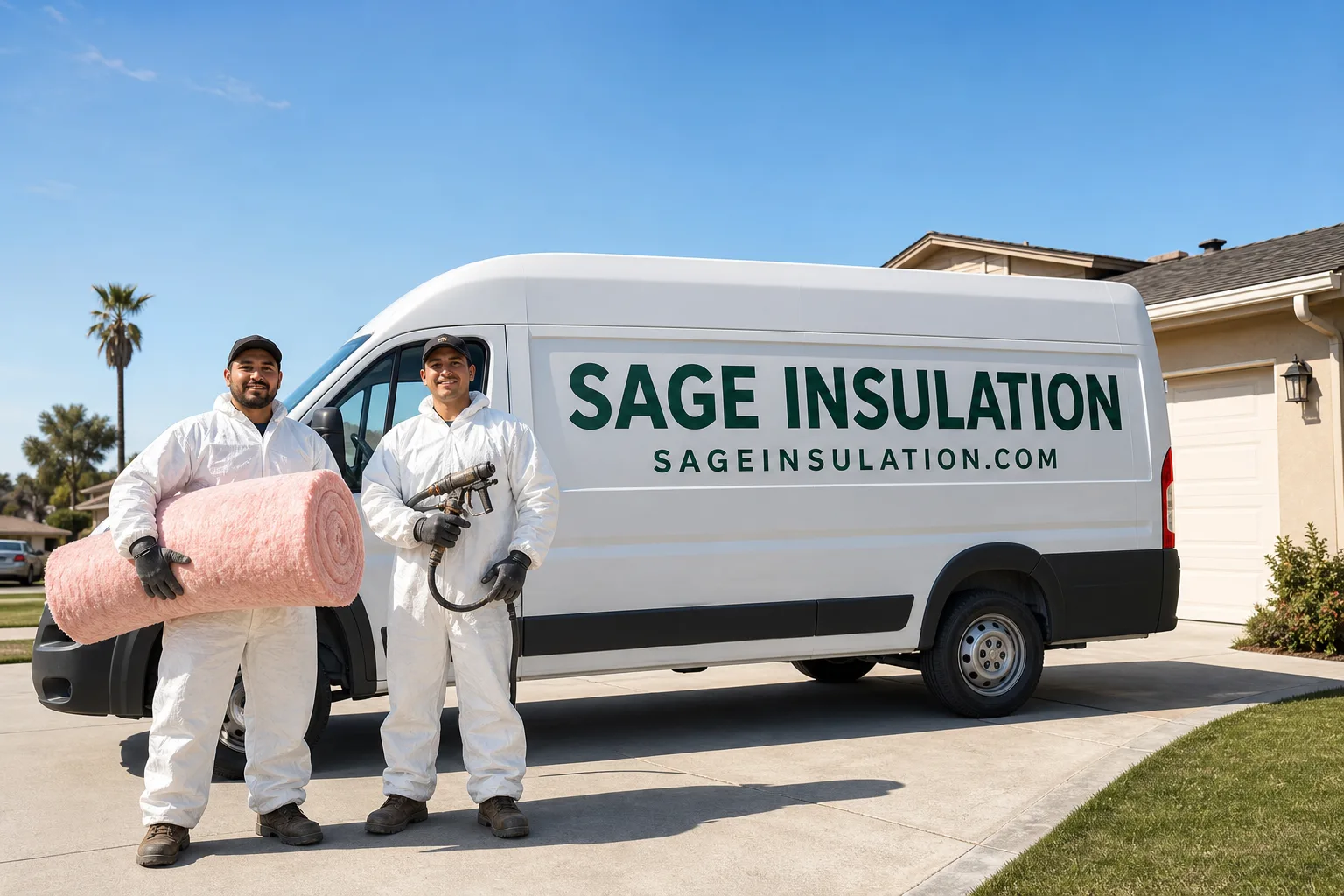
Fast, Reliable Attic Insulation Across Hollywood
If your Hollywood apartment or bungalow bakes in summer and never holds heat in winter, the answer is usually overhead. Most of the 1920s – 1940s wood-frame buildings between Western and Gower were built with empty joist bays, and in a Mediterranean climate that means radiant heat pours down through low-slope roofs from mid-morning until sunset. Sage Insulation reaches every block in the 90028 ZIP within 24 hours for an inspection, and our crews work around the tight parking and shared walls that define Hollywood’s courtyard apartments. Call (855) 360-9333 for a free assessment. We’ll tell you what’s actually in your ceiling before recommending anything at all.
Why Sage Insulation Is Hollywood’s Preferred Attic Insulation Company
We carry eight manufacturer lines, including Owens Corning, Johns Manville, Knauf, and Rockwool, so we recommend what performs best in a specific Hollywood building rather than whatever our shop happens to stock most of. That material-agnostic approach matters here because a 1930s stucco courtyard off Sunset needs different treatment than a wood-frame bungalow near Hollywood Blvd. Alan Herrera leads every scope conversation with this question: what is this attic actually failing at? Sometimes it’s heat gain. Sometimes it’s street noise bleeding down through shared joist bays. Sometimes it’s old degraded material that needs to come out before anything new goes in.
Our crews have pulled failed fiberglass out of attics above Vine Street, wrapped party-wall penetrations in buildings where neighbors share a flat roof, and installed Attic Insulation systems that survive Santa Ana wind heat spikes without losing effectiveness. Hollywood customers repeatedly mention that we showed up when we said, explained the condition honestly, and left the job site cleaner than we found it. We also bring our own ladders, tarps, and corner covers into every courtyard and rear-access attic, because we know what Hollywood’s narrow side yards and locked carports look like on a weekday afternoon.
Attic Insulation Removal in Hollywood
Attic Insulation Removal in Hollywood is the first step on most prewar buildings here, because original material from the 1920s – 1940s is usually compacted, rodent-soiled, or so thin it never performed in the first place. Flat and low-pitch roofs collect heat and debris for decades, and the old batts under them often hold moisture, dust, and organic matter that degrade air quality in the units below. We use HEPA-filtered vacuums and hand-bagging methods that keep dust out of the hallways and stairwells of occupied courtyard apartments. The scope includes pulling out all existing material, exposing the joist bays for inspection, and leaving the deck surface clean before air sealing begins.
What Removal Reveals
In Hollywood’s older attics, removal is the only way to see what the original builders left behind. That often means knob-and-tube wiring runs across the ceiling joists, cracked plaster keys, or shared wall cavities you can see straight through from one unit to the next. You can’t responsibly blow new material over those conditions without seeing them first. That is why removal and inspection are handled as one job here, never as an optional line item.
Removal Scope for Shared Roofs
When the roof is shared, the removal scope changes. Pulling material out of one tenant’s attic can shift airflow, release old dust into a neighboring bay, or expose a party-wall gap that suddenly carries noise between units. We scope removal on courtyard buildings by looking at what removing the material will reveal in adjacent spaces, then isolating the work area so the rest of the building stays quiet and clean. Most full attic removal jobs in Hollywood’s older wood-frame stock run $1,800 – $3,600 depending on square footage, access conditions, and contamination level.
Insulation Contractors in Hollywood
Insulation contractors in Hollywood divide into two groups: crews that install one product line fast, and crews that diagnose first. Sage Insulation works the second way, deliberately. A top-floor unit above a shared low-slope roof needs different material than a single-family bungalow where the owner wants to add attic depth without moving out during installation. We install blown-in cellulose, fiberglass batts, mineral wool, and open- or closed-cell spray foam, which means the recommendation comes from reading the actual thermal and acoustic conditions in your attic rather than from a default material choice.
Subcontractor-Grade Diagnostics
Builders and remodelers in Hollywood call us because the same property often has three different ceiling conditions under one roof. A garage addition with limited depth may need closed-cell spray foam to hit usable R-value in a 2×6 cavity, while the original 1930s attic above the main unit performs better with dense-packed cellulose. We scope each cavity separately. The third-floor walkup above Hollywood Blvd gets the assembly that stops radiant gain; the ground-floor unit next to the carport gets air-sealing priority. One property, one set of decisions per cavity.
Working Within the 90028 Constraints
Parking a box truck near Hollywood and Vine at 8 a.m. is a logistics problem, and parking it near a 12-unit courtyard with a single narrow alley is a design problem. Our crews arrive in smaller vehicles staged to avoid blocking resident parking, and we carry material in through the same rear doors tenants use. We also coordinate with building managers on work hours, noise limits, and vacuum exhaust routing so insulation work doesn’t echo through a shared courtyard for six hours straight.
Trusted Brands We Service in Hollywood
We install Owens Corning fiberglass, Johns Manville mineral-wool board, Knauf batt products, and Rockwool acoustic solutions among our full eight-brand inventory, so your Hollywood attic gets a product that matches the conditions rather than whichever brand was easiest to source that week. Local projects near Franklin Village often benefit from Rockwool’s density for party-wall sound control, while a 1940s bungalow with deep joist bays handles GreenFiber cellulose beautifully. Carrying multiple lines also means parts and replacement material are available quickly when a project needs to adjust mid-scope, which happens often in buildings where original framing is a moving target.
Common Attic Insulation Problems We See in Hollywood Homes
- Radiant heat through low-slope roofs. The sun hammers flat and low-pitch roofs from April through October, and original attics have nothing to stop that heat from radiating into top-floor rooms. A radiant barrier combined with air-sealed insulation stops more heat gain than adding R-value alone ever will, because radiant heat is reflective, not conductive.
- Party-wall noise and fire-separation gaps. Courtyard apartments share joist bays and wall cavities. Insulating one unit without addressing the party wall means sound and smoke can still travel laterally into the neighboring apartment. We scope these as building-wide gaps, not individual unit ceilings.
- Knob-and-tube wiring buried under new blown-in material. Original wiring in 1920s – 1930s Hollywood buildings often runs uncapped across ceiling cavities. Blowing cellulose or fiberglass directly over live knob-and-tube is a fire risk and violates current electrical code. The wiring must be evaluated and addressed before new material goes in.
- Degraded or absent original insulation. Many prewar buildings here never had insulation, and the few loose batts found in older attics have compacted to the thickness of a blanket. That means the building has performed with essentially no thermal barrier since construction, and the HVAC has been compensating ever since. Full removal and re-insulation changes the acoustic and thermal profile of the whole floor below.
Pricing for Attic Insulation in Hollywood, CA
A single-tenant attic insulation top-up with blown-in cellulose in Hollywood runs $1,100 – $2,400 for a typical 900 – 1,500-square-foot attic. Full removal and re-insulation on a 1920s – 1940s courtyard apartment or bungalow runs $2,800 – $5,600, depending on contamination level, access, and whether the scope includes party-wall air sealing. Dense-packed cellulose in an attic floor runs $2.50 – $4.00 per installed square foot, while Rockwool batts for acoustic separation run higher per square foot but deliver far better sound damping through shared wall assemblies. Spray foam work, especially closed-cell for restricted 2×6 cavity depth, costs more per board foot because of the curing and ventilation requirements. Every estimate is free. Call (855) 360-9333 and we’ll send someone to look before any numbers are final.
We Also Serve Cities Near Hollywood
Our crews run daily routes through Koreatown, Echo Park, Silver Lake, and the greater Los Angeles basin from our Downey base, reaching Attic Insulation in Hollywood and the surrounding 90028 blocks without long dispatch delays. If your building sits near the 101 or just off Fountain Avenue, we’ll likely reach you on the same schedule. The same eight-brand inventory and material-agnostic diagnostics apply everywhere we go.
Serving Hollywood, CA — Our Local Coverage Area
We’re based in the Hollywood area and know this community well. Use the map below to see our service coverage — if you’re nearby, we can almost certainly help.
FAQs About Attic Insulation in Hollywood
A shared flat roof and party walls mean one tenant’s attic cavity is physically connected to the neighboring units, so blowing insulation into a single apartment changes sound transmission, air movement, and fire separation for every adjoining space. Scope on courtyard buildings must evaluate all connected cavities at once, because leaving a party wall unsealed undoes most of the acoustic and thermal work. Call (855) 360-9333 to schedule a building-wide assessment with Alan Herrera’s team at Sage Insulation.
Yes. All access happens through the interior ceiling or an existing attic hatch, so the exterior stucco, original windows, and roofline stay untouched. We work entirely from inside the building envelope, which also keeps the project compliant with Hollywood’s historic-preservation expectations for period bungalows. Your facade remains exactly as it is.
For an uninsulated low-slope roof in Hollywood, the first priority is a radiant barrier combined with air sealing, because radiant heat gain is the dominant summer problem and a radiant barrier blocks that reflective load far more effectively than adding fiberglass alone. Noise from Sunset and Hollywood Blvd travels structurally, so the same air-sealed assembly with dense-packed material like Rockwool or GreenFiber cuts both heat and sound. We’ll confirm what’s actually in your ceiling first, then recommend the assembly that solves both problems without overbuying R-value.
Old knob-and-tube wiring that remains live inside an attic cavity must be addressed before new material covers it, because burying live K&T under cellulose or fiberglass creates an overheating risk and a code violation on the insulation side. The safe sequence is to have the wiring evaluated, decommissioned or replaced, and then place the insulation. Never blow material directly over live knob-and-tube.
Yes. When the original material is compressed, contaminated, or so sparse it never performed, removal is mandatory before installing new material so the joist bays can be inspected for wiring, leaks, and party-wall gaps. New insulation over old rot or live wiring hides the exact problems that cause underperformance and fire risk. Removal adds to the job cost, but skipping it on a 1930s Hollywood attic is not a responsible retrofit. Call (855) 360-9333 for an exact removal-and-reinsulation quote. Estimates are free.
Need attic work in a shared Hollywood roof, a historic bungalow, or a hot top-floor unit? Call Sage Insulation at (855) 360-9333 and we’ll send someone to inspect what is actually in your ceiling. No product push until we see the cavity. Serving every block of the 90028 ZIP and the surrounding Hollywood flats, 24-hour inspection scheduling available.
Written by Alan Herrera, Owner at Sage Insulation, serving Hollywood and greater Los Angeles since the company’s founding in Downey, CA.