Fast, Reliable Attic Insulation Across Lakewood
Most Lakewood homes need attic insulation work that looks nothing like a new-build install. The original 1950s tract houses that dominate this city were built with uninsulated walls and nothing but a vapor barrier in the attic, so what we’re doing here is almost always retrofit work in shallow, low-pitch attics accessed through a hallway scuttle or closet hatch. If your upstairs rooms bake by mid-morning in summer or your air conditioner runs constantly from June through October, the problem is usually that your attic is doing nothing to stop heat gain. We’ve worked in Lakewood long enough to know exactly what we’ll find before we open the hatch. Call us at (855) 360-9333 and we’ll send a crew to your neighborhood.
Why Sage Insulation Is Lakewood’s Preferred Attic Insulation Company
Homeowners across Lakewood’s 90711, 90712, 90713, and 90714 ZIP codes call us because we don’t walk in pushing a single product line. Sage Insulation is material-agnostic, which matters a lot in a city full of 70-year-old tract houses where the right fix might be blown-in cellulose, a radiant barrier, or removing decades of composted batts before anything new goes in. We carry Owens Corning, Knauf, and Rockwool, along with five other manufacturer lines, so the recommendation we make is based on what your specific attic actually needs, not what’s sitting in our warehouse.
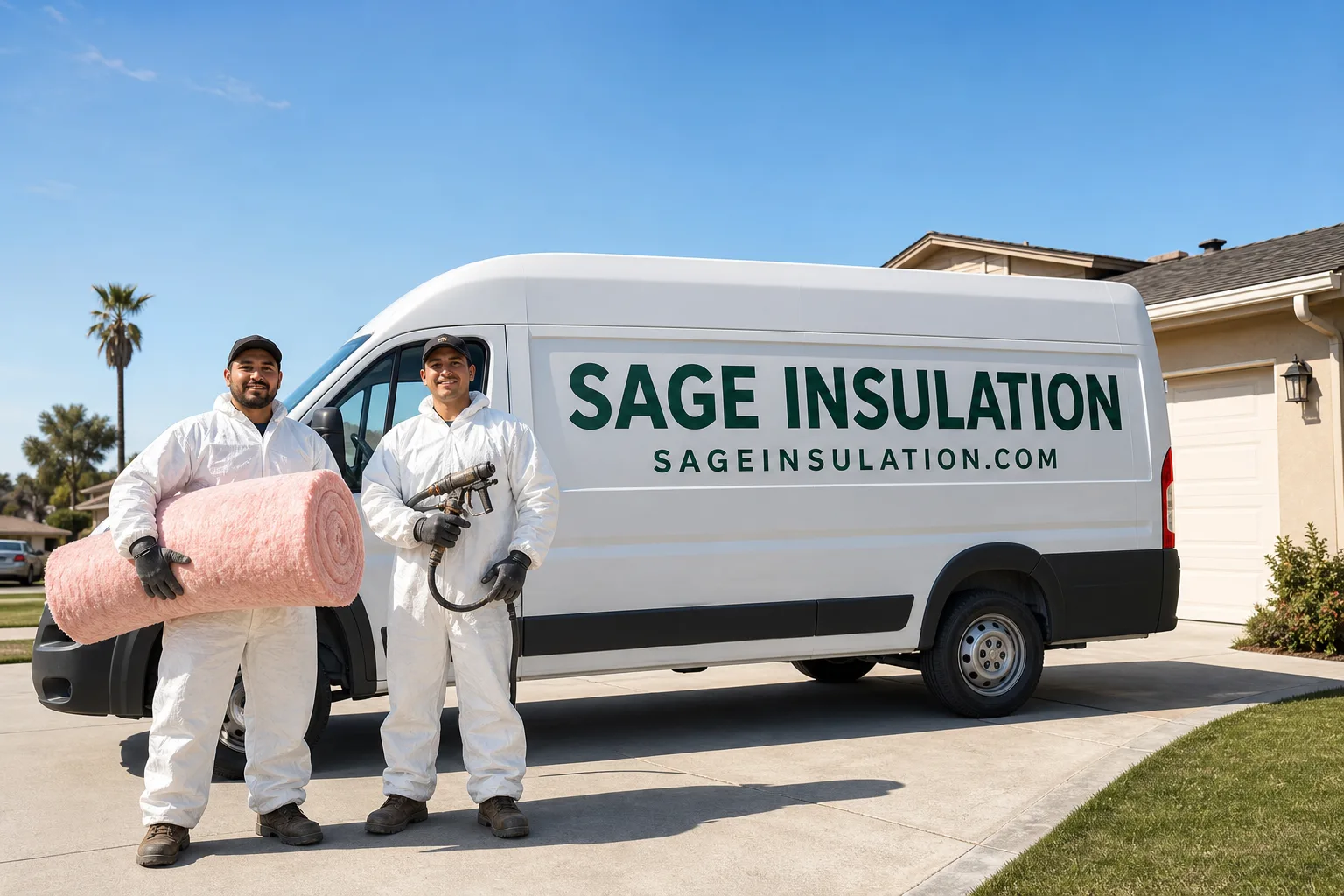
Alan Herrera founded this company on a simple idea: diagnose before prescribing. In Lakewood, that means we look at access, venting, existing material, and how the house behaves on hot Santa Ana days before we quote anything. Our crews have opened hundreds of hallway scuttles off Lakewood Boulevard and Candlewood Street, and they know exactly what to expect from a 1953 ranch with original stucco and a low-pitch roof. That local experience saves you time and prevents us from quoting work you don’t need.
Radiant Barrier in Lakewood
Radiant Barrier in Lakewood addresses a problem that insulation alone won’t solve: the sun hammering your roof deck sends attic temperatures soaring past 130°F on summer afternoons, and that heat radiates down into your living space no matter how much fiberglass or cellulose sits on the attic floor. Radiant barrier is a reflective material installed on the underside of the roof rafters, and it reflects that heat back out instead of letting it bake your ceiling. In a shallow 1950s attic with a low-pitch roof, a properly installed radiant barrier can dramatically cut the heat load on the rooms below, especially upstairs bedrooms that get direct afternoon sun. A typical radiant barrier installation in a Lakewood tract home runs $1,200 to $2,800 depending on attic size and rafter configuration.
Reflective Foil and Perforated Options
We install two common radiant barrier types. Perforated foil is the standard choice for older attics because it allows some moisture transfer through the foil, which matters in Lakewood’s coastal-plain climate where winter condensation can collect even if heat is the bigger issue. For attics where we’re also replacing the roof deck or doing extensive air-sealing, a solid foil plus insulation hybrid can work. Either way, the material goes under the rafters with an air gap, which is critical to how it performs. The details matter in a 1950s attic because rafter spacing and the presence of roof vents affect placement.
When a Radiant Barrier Makes Sense Here
If your attic already has insulation on the floor and your home still stays hot, the problem is radiant heat gain, and that’s exactly what a radiant barrier handles. You’ll see the biggest difference in single-story Lakewood tract houses with dark shingle or composition roofs and little tree shade, especially homes along the east-west oriented streets like Del Amo Boulevard or South Street where afternoon sun hits the roof directly. A radiant barrier also helps your HVAC system work less, which matters in homes where the ductwork runs through the attic and gets heat-soaked every summer day.
Attic Cleaning Services in Lakewood
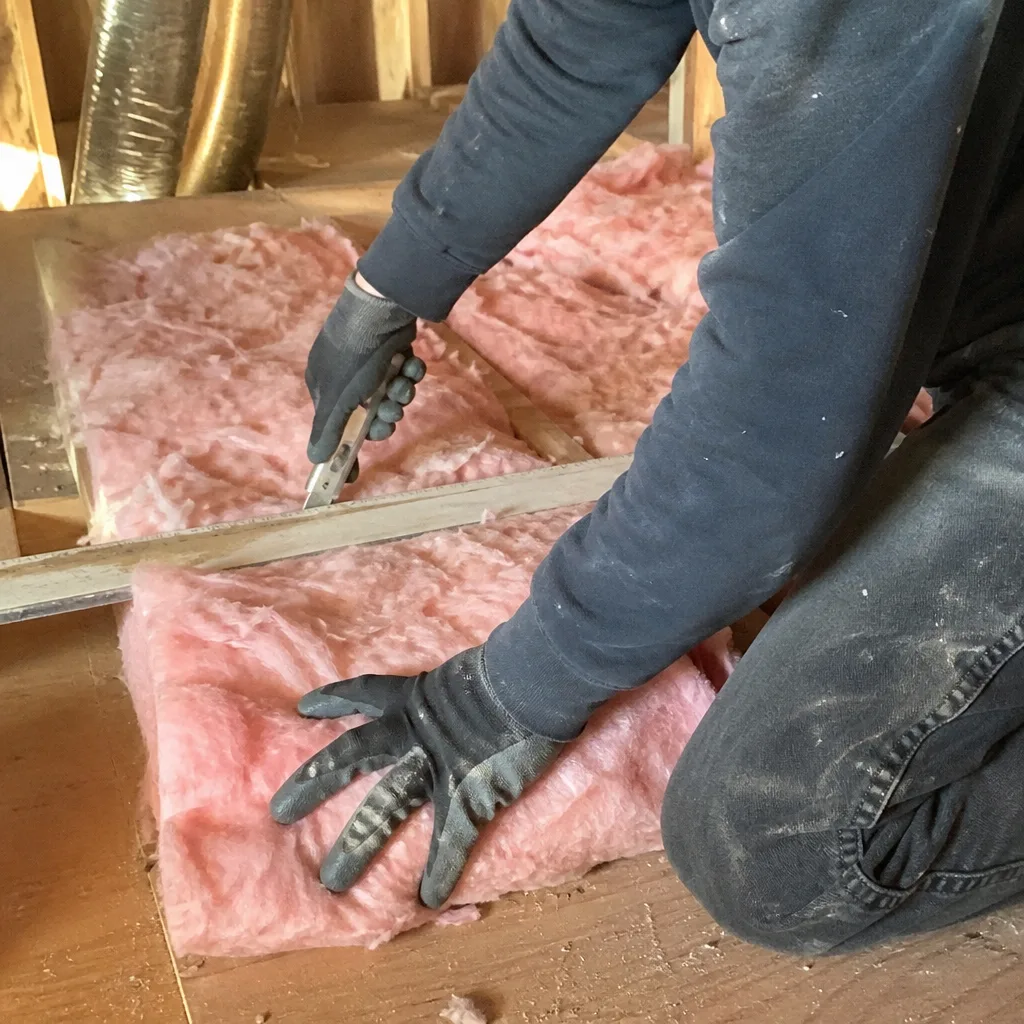
Attic Cleaning Services in Lakewood are the step many homeowners skip but shouldn’t, particularly in original 1950s tract homes where the existing insulation has been heat-cycled for seven decades. Old rock-wool and kraft-faced batts break down, sag, compress, and in some cases become nesting material for rodents. Before blowing in new insulation or adding a radiant barrier, removing that degraded material matters because new insulation can’t perform over a layer of dust-choked, flattened fiber that lost its R-value years ago. A typical attic cleaning and old-insulation removal in a Lakewood home runs $800 to $1,800, with the price driven by attic size, access difficulty, and how much material needs to come out.
Removal of Old, Composted Batts
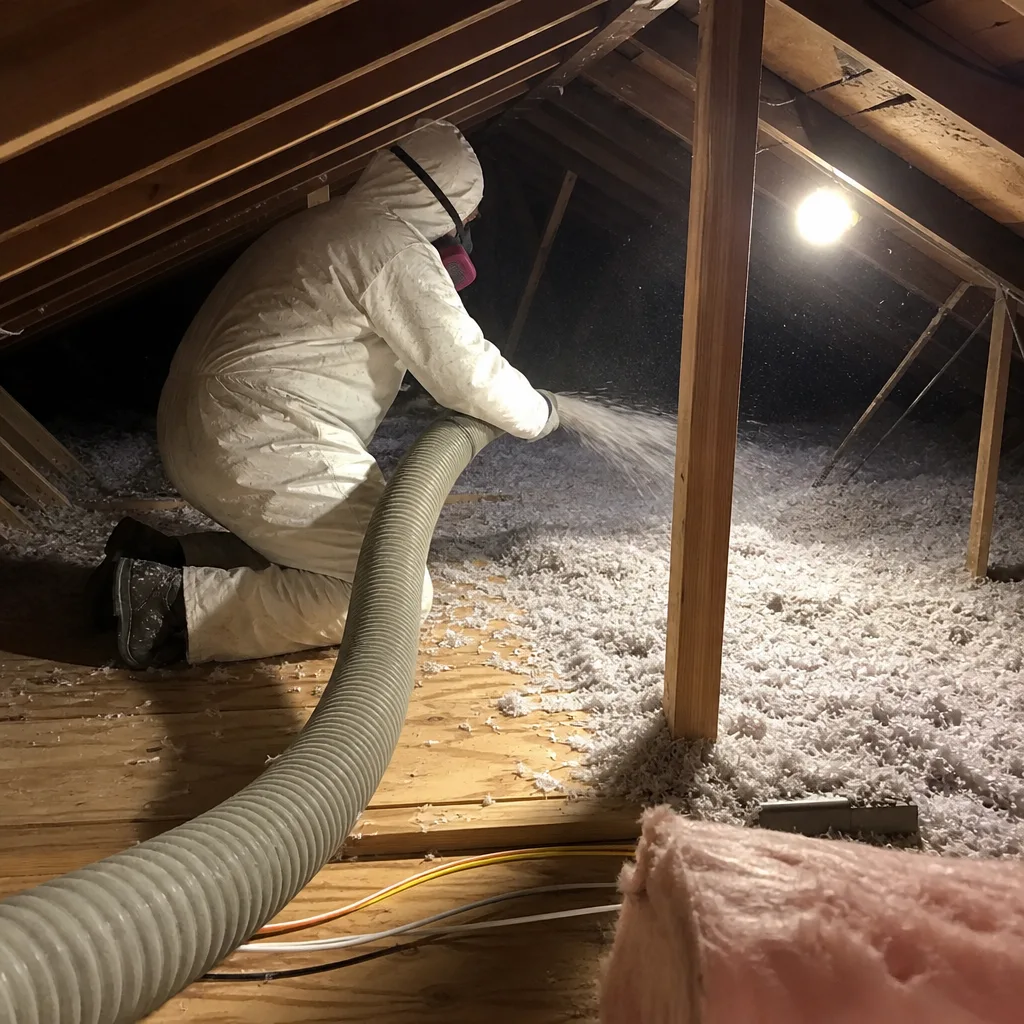
The rock-wool batts common in 1950s Lakewood construction look nothing like modern insulation after decades of heat. They crumble, hold dust, and lose all loft. Our crews vacuum out the old material, inspect the attic floor and top plates for air-sealing gaps, and then prepare the space for whatever insulation we install next. In homes where the original material is decades old, this step improves indoor air quality too. You’d be surprised how much attic dust filters down through light fixtures and ceiling gaps.
Air-Sealing Preparation
A clean attic is a sealable attic. Once the old insulation is out, we can see the top plates, wire penetrations, recessed lights, and plumbing chases that leak conditioned air into the attic. We seal those bypass gaps before installing new insulation. In a shallow Lakewood attic served by a tiny hallway scuttle, getting someone in there who can actually see and reach those gaps is non-negotiable. Skipping this step leaves your house leaking air no matter how much insulation we add afterward.
What happens when you call
- 1
A real person answersNo phone trees — you reach a local pro.
- 2
You get an upfront price rangeHonest numbers before anyone is dispatched.
- 3
A background-checked tech heads outLicensed & insured, dispatched right away.
- 4
You approve before work beginsNothing starts until you say go.
Trusted Brands We Service in Lakewood
We stock materials from eight manufacturer lines so we can recommend what works best in your specific attic, not what we have the most of. For Lakewood homes, we frequently use Owens Corning fiberglass batts where high R-per-inch matters and access is manageable, Knauf blown-in fiberglass for open attics where we need to cover top plates quickly, and Rockwool mineral wool in homes where fire rating and moisture resistance add value. Since we’re local to the area and keep inventory nearby in Downey, turnaround for Lakewood jobs stays quick. We don’t carry brands outside our confirmed lineup, and we won’t upsell you into a product that doesn’t solve the problem.
Common Attic Insulation Problems We See in Lakewood Homes
- Sagging, composted batts from the original 1950s build. After 70 years of summer heat cycling, rock-wool and kraft-faced batts lose loft and R-value and turn into a dusty crumble. We see this in nearly every original Lakewood Plan tract house we open.
- Unvented or poorly vented low-pitch attics. Original tract roofs didn’t leave much room for continuous ridge and soffit venting, so heat gets trapped in the attic and cooks whatever insulation is up there, especially during Santa Ana events when outside temps climb over 100°F.
- Air-sealing gaps hidden by shallow attics and scuttle access. It’s hard to spot bypass leaks around top plates, recessed lights, and plumbing chases when you can barely move in an attic with 18 inches of headroom and a 2-by-2-foot access hatch. We find these gaps in nearly every Lakewood retrofit.
- Exposed garage ceilings that transmit heat into living space. Many 1950s Lakewood garages were built with open ceilings and zero insulation. When a garage shares a wall or supports a room above, it leaks heat into the conditioned space and drives up the AC load.
Pricing for Attic Insulation in Lakewood, CA
Here are straight numbers for the Lakewood market. Blown-in attic insulation in a typical 1,100-1,400 square foot tract home runs $1,400 to $2,600. A top-up over existing but underperforming insulation usually runs $900 to $1,700. Attic batt insulation for smaller or awkward attics runs $1,100 to $2,200. Full removal and replacement, including cleaning out old material and air-sealing, runs $2,400 to $4,500. Radiant barrier installations run $1,200 to $2,800. Attic cleaning alone runs $800 to $1,800. The things that move a Lakewood quote are attic height, access type, existing material condition, and whether we’re adding venting or baffles. Call (855) 360-9333 for a free on-site estimate, and we’ll give you an exact number based on your attic.
We Also Serve Cities Near Lakewood
Sage Insulation works throughout southeast LA County. If you’re in Signal Hill, Bellflower, Long Beach, or Paramount, we send crews there regularly and know those housing stocks well, especially the post-war tract homes that mirror Lakewood’s construction patterns. For a closer look at our full Attic Insulation services, see the main service page. And if you want more context on how we serve this area, visit our Lakewood city page.
Serving Lakewood, CA — Our Local Coverage Area
We’re based in the Lakewood area and know this community well. Use the map below to see our service coverage — if you’re nearby, we can almost certainly help.
FAQs About Attic Insulation in Lakewood
Most Lakewood homes were built in the 1950s under the Lakewood Plan, which meant slab-on-grade foundations, no attic insulation, and little more than a vapor barrier in the walls. So every job we do here is a retrofit in a 70-year-old house where we’re working around the original construction, not quoting new-build R-values from a chart. That’s why the right approach is a custom assessment of what’s actually in your attic now. Give us a call at (855) 360-9333 and we’ll diagnose before we quote anything.
We work through small access points all the time. Our crew uses compact equipment and lighting to get into shallow attics without cutting new holes unless absolutely necessary. In some cases we can widen a hatch or add a proper access door if the opening is too small for safe work, and that cost gets included in the quote. The key is that we don’t skip air-sealing or miss top plates just because the access is tight. Call (855) 360-9333 and we’ll tell you what your specific hatch will allow.
A radiant barrier makes the single biggest difference for heat gain, because it reflects heat away before it ever reaches your ceiling. After that, air-sealing penetrations and bringing the attic floor insulation up to current depth helps hold conditioned air in the rooms below. In a shallow low-pitch attic, doing both together gives you the best result. We’ll assess your attic and recommend the order that makes sense for your roofline and budget.
Yes. We remove old, degraded insulation, vacuum out dust and debris, and prepare the attic for new material. This is often the first step in any Lakewood retrofit because you can’t just blow new insulation over crumbled, sagging fiber that lost its R-value. We’ll give you a clear picture of what’s in your attic and what it’ll take to remove it. Estimates are free at (855) 360-9333.
Yes, and we do it regularly. Low pitch and limited headroom make the work slower, but the material installs under the rafters where the roof slope doesn’t matter as much as the rafter spacing. Our crews are used to working in shallow space, and a confined attic doesn’t reduce the effectiveness of a radiant barrier when it’s installed with the proper air gap. We’ll inspect your attic and tell you exactly what’s possible before starting.
Contact Sage Insulation for Attic Insulation in Lakewood
On a job in the Lakewood Park neighborhood off Clark Avenue, our crew found the original 1950s rock-wool batts sagging and composted after decades of heat cycling in a shallow attic with only a hallway scuttle for access. We removed the old material, air-sealed the top plates and recessed lights, and blew in GreenFiber cellulose to bring the attic up to current code before installing a radiant barrier to cut the 130°F+ summer attic temperatures. The homeowner said the upstairs rooms finally stopped baking by mid-morning. That’s the kind of result we deliver in Lakewood every week. Call (855) 360-9333 for a free estimate, and Alan Herrera or a member of your local crew will walk you through what your attic actually needs.
Written by Alan Herrera, Owner at Sage Insulation, serving Lakewood and surrounding communities since the company’s founding.