
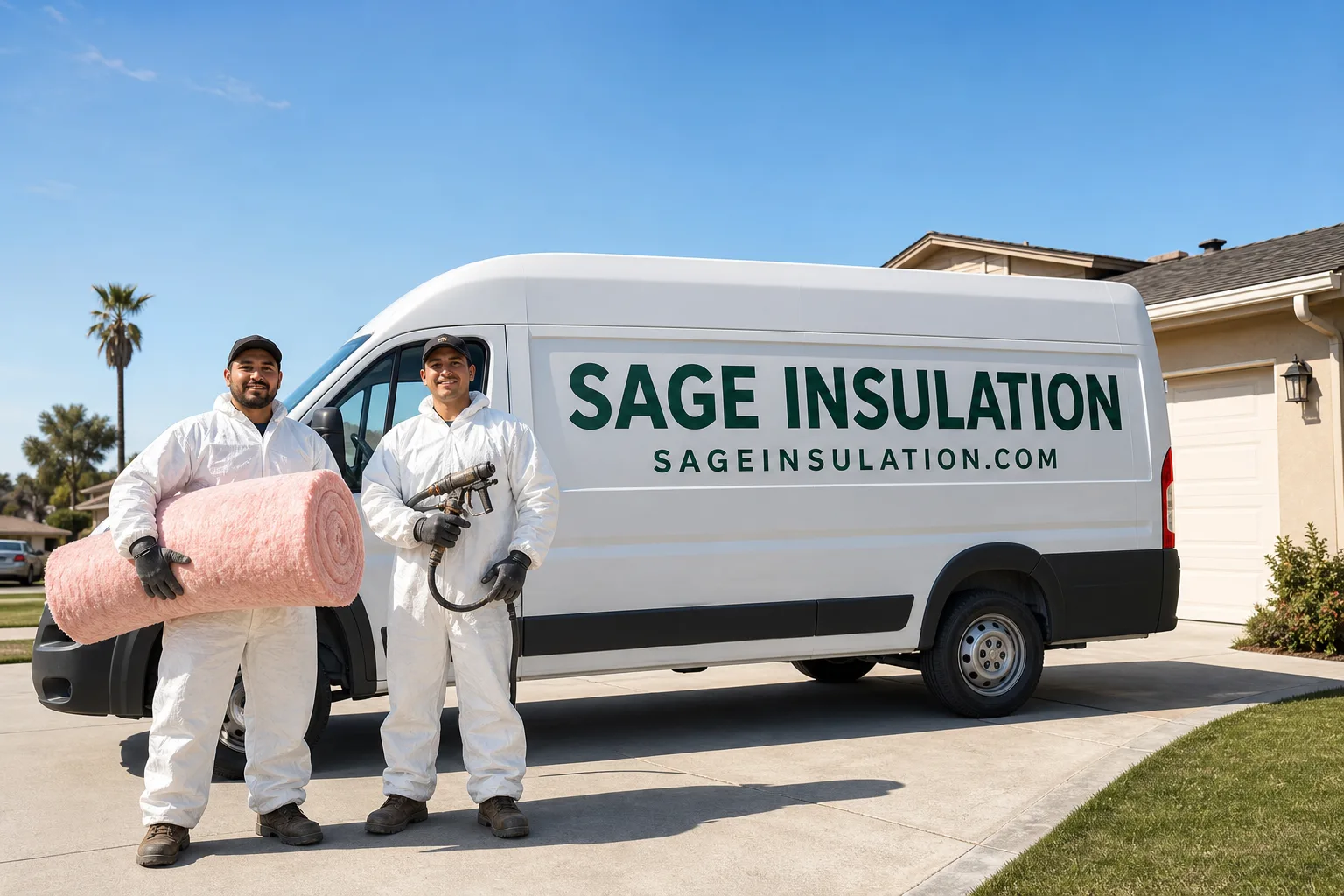
Fast, Reliable Attic Insulation Across South San Gabriel
If your South San Gabriel home won’t hold a steady temperature and your energy bills climb every summer, the answer is usually sitting right above your ceiling. Most homes here were built between the 1950s and 1980s, and a lot of them still have original fiberglass batts that settled years ago or, in some cases, no meaningful insulation at all. Attic insulation in South San Gabriel typically runs $1,800 to $4,200 for a full install on a 1,200-square-foot home, depending on the method and materials. Our crews know the tight attic hatches, low-pitch roofs, and narrow lots here better than anyone. Call (855) 360-9333 and we’ll give you a straight answer about what your attic actually needs.
Why Sage Insulation Is South San Gabriel’s Preferred Attic Insulation Company
South San Gabriel homeowners call us because we don’t walk in pushing one product line. We carry three installation methods – attic insulation, spray foam, and blown-in – and stock eight manufacturer brands including Owens Corning, Johns Manville, and Knauf, so the recommendation you get reflects your home’s actual performance gaps, not whatever we happen to have the most of in the truck.
Alan Herrera built Sage Insulation around a simple idea: explain the options honestly before picking up a hose or a blower. That matters in South San Gabriel, where older tract homes and ranch-style builds each have their own quirks. Homes off Del Mar Avenue from the 1960s often have aluminum wiring that demands extra care during installation. Houses near San Gabriel Boulevard with unpermitted additions and converted garages need a different approach entirely.
Our response time to South San Gabriel is typically same-day or next-day for assessments. We’re based nearby in Downey, so scheduling doesn’t stretch out for weeks. Homeowners across the 91755 zip code have worked with us on everything from full attic insulation replacement to simple top-ups before summer hits.
Attic Ventilation in South San Gabriel
Attic Ventilation in South San Gabriel is the difference between an attic that works with your insulation and one that fights it. South San Gabriel’s warm inland climate means temperatures inside an unvented attic can climb past 140°F in July and August. Without proper airflow, that heat radiates down into your living spaces all night, keeping your AC running long after the sun’s gone down. A typical attic ventilation project in South San Gabriel runs $450 to $1,200, depending on whether we’re adding ridge vents, soffit vents, or both.
Why ventilation matters more here
South San Gabriel sits in the San Gabriel Valley, where summer heat builds for days and doesn’t fully release at night. Homes built in the 1960s and 1970s often have soffit vents that are blocked by decades of paint, or no ridge vent at all. That trapped heat shortens the life of your shingles and makes every room under the attic feel five to ten degrees warmer. When we combine ventilation with new insulation, the difference in comfort is immediate.
What we check on every ventilation call
We look at how air moves through your attic space, not just whether there’s a hole somewhere. On South San Gabriel ranch homes with low-pitch roofs, we often find that the original vents were undersized for the attic volume. We calculate the right intake and exhaust balance based on your attic’s square footage and roof configuration, then install vents sized to handle a San Gabriel Valley August.
Radiant Barrier in South San Gabriel
Radiant Barrier in South San Gabriel works differently than insulation – it reflects heat rather than absorbing it. In a climate where the sun pounds on low-pitch roofs for six months straight, a radiant barrier stapled to the underside of your roof rafters can reduce attic temperatures by 15 to 25 degrees. A radiant barrier installation in South San Gabriel typically runs $900 to $2,200 depending on attic size and accessibility.
Heat gain through the roof
Your attic insulation slows heat transfer, but radiant heat from the sun beating down on shingles is relentless. Homes in South San Gabriel with dark composition shingles and little shade absorb that heat all day. A radiant barrier adds a second line of defense, reflecting radiant heat back out before it ever reaches your insulation layer. For homes with 18 to 24 inches of attic clearance, where blown-in insulation is already packed tight against the ceiling, a radiant barrier is often the one upgrade that makes a real difference without compromising the insulation already in place.
When a radiant barrier makes sense
If your attic already has decent insulation but your upstairs rooms still roast in the afternoon, the problem is likely radiant heat gain, not a lack of insulation. We see this a lot in South San Gabriel’s older tract homes with truss-framed roofs and no shading. The fix is straightforward: install the barrier, verify the vent balance, and measure the temperature drop at the hottest point of the day.
Trusted Brands We Service in South San Gabriel
We stock and install insulation from Owens Corning, Johns Manville, Knauf, Rockwool, and five other industry-recognized manufacturers. For South San Gabriel homeowners, that means we’re not locked into one manufacturer’s product line or pricing program. If your 1960s home needs blown-in fiberglass or cellulose, we can use GreenFiber or Owens Corning AttiCat. If you want mineral wool for its fire resistance and sound dampening, Rockwool is on the shelf. If you prefer spray foam, we install both Icynene and Demilec systems. Having eight brands available in our Southern California inventory means faster turnaround for South San Gabriel projects and recommendations based on performance fit, not vendor incentives.
Common Attic Insulation Problems We See in South San Gabriel Homes
- Settled or missing fiberglass batts in 1950s-to-1980s tract homes. The original batts installed when these houses were built have compressed under decades of heat, dust, and occasional foot traffic. A 6-inch batt that started at R-19 can lose a third of its R-value after 40 years of San Gabriel Valley summers.
- Gaps around attic penetrations exposed by Santa Ana winds. When the winds push in from the northeast, pressurized hot air forces its way through every unsealed gap around recessed lights, bathroom fans, and attic hatches. We find these leaks by feel on windy days, and sealing them makes an immediate difference in both comfort and dust.
- Compressed insulation from low attic clearances. In South San Gabriel attics with only 18 to 24 inches of peak height, we regularly see insulation that’s been stepped on, flattened, or shoved aside to make room for storage. Compressed insulation loses most of its R-value, and in attics this tight, removal and re-blow is often the only real fix.
- Insulation installed incorrectly around aluminum wiring. Homes built in the 1960s and early 1970s in South San Gabriel often still have aluminum branch circuits. Loose-fill insulation packed against old aluminum connections can create a fire hazard if the wiring is not properly protected and inspected first.
Pricing for Attic Insulation in South San Gabriel, CA
We Also Serve Cities Near South San Gabriel
Our crews work throughout the western San Gabriel Valley, so if you live in Monterey Park, Montebello, East Los Angeles, or Rosemead, we can schedule a visit just as quickly as we do in South San Gabriel. Our Attic Insulation services cover the entire region, and our Attic Insulation in South San Gabriel work brings us through these neighboring communities every week.
Serving South San Gabriel, CA — Our Local Coverage Area
We’re based in the South San Gabriel area and know this community well. Use the map below to see our service coverage — if you’re nearby, we can almost certainly help.
FAQs About Attic Insulation in South San Gabriel
Can you install attic insulation in a South San Gabriel home with only 18 inches of attic clearance?
Yes. For attics with 18 to 24 inches of peak clearance, blown-in insulation is the only practical method, and we run our compact blow-in machines from outside the house through a small attic hatch. This is one of the most common situations we see in South San Gabriel, where 1950s and 1960s ranch homes were built with very tight attic spaces. The work gets done without anyone stomping through your attic, and without disturbing neighboring properties on narrow lots. Call (855) 360-9333 and we’ll tell you if your attic qualifies for blown-in.
How do you handle aluminum wiring when insulating an attic in a 1960s South San Gabriel home?
We inspect every wire run in the attic before we install any material. Aluminum wiring, common in South San Gabriel homes built between roughly 1965 and 1973, expands and contracts with heat more than copper, which can loosen connections over time. We ensure no insulation contacts those connections and that all junction boxes are properly covered before any blown-in material goes in. This is a safety step we never skip on older South San Gabriel homes.
What type of insulation works best for South San Gabriel’s hot summers and low-pitch roofs?
For most South San Gabriel homes, blown-in cellulose or fiberglass paired with a radiant barrier delivers the best summer performance. Cellulose, like GreenFiber, settles into every corner and slows the radiant heat from those low-pitch, sun-baked roofs more effectively than old batts. If attic clearance allows, we may recommend a hybrid: blown-in at ceiling level plus a radiant barrier stapled to the rafters. The exact right answer depends on your attic, but that’s what we’re here to assess in person.
Do you offer attic ventilation improvements for older South San Gabriel homes?
Yes. Attic ventilation is a core part of our South San Gabriel work. We add ridge vents, soffit vents, and gable vents as needed, and we calculate the airflow balance based on your attic’s square footage and the San Gabriel Valley’s summer heat. Older tract homes here were often built with minimal venting, and adding proper airflow is one of the most cost-effective improvements a homeowner can make.
How does insulation work in South San Gabriel handle occasional Santa Ana winds?
Santa Ana winds test your attic’s air sealing more than its insulation. When those hot, dry winds press against your house, they force air through every gap around attic penetrations, recessed lights, and hatch frames. Our installations include sealing those penetrations as part of the job, not as an add-on. South San Gabriel homeowners who seal and insulate together notice less dust, less draft, and a more stable indoor temperature when the winds pick up. Call (855) 360-9333 and we’ll evaluate your attic’s wind exposure.
Written by Alan Herrera, Owner at Sage Insulation, serving South San Gabriel and the surrounding San Gabriel Valley.