
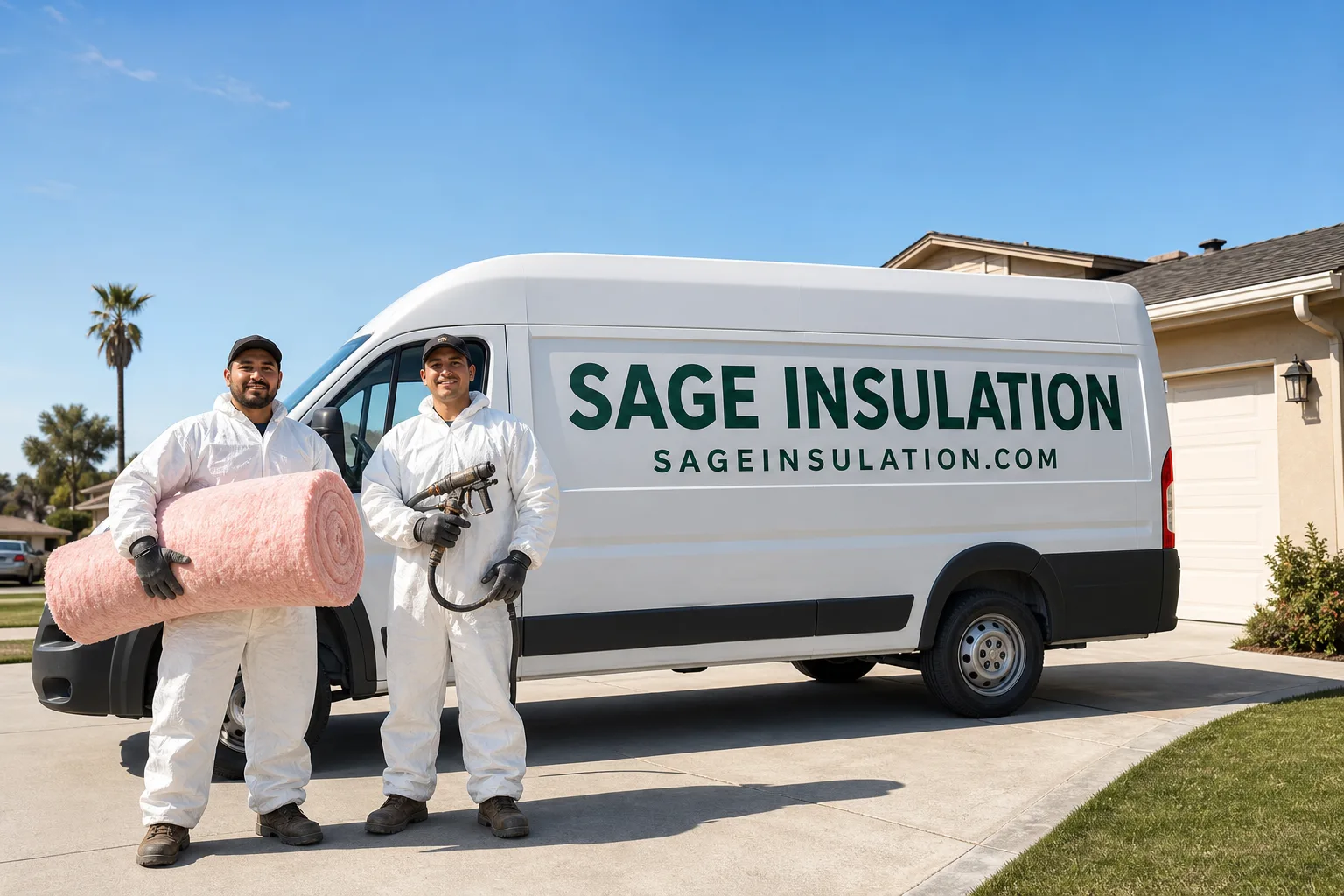
Spray Foam Insulation in View Park-Windsor Hills: The Closed-Cell-First Strategy Hilltop Homes Actually Need
Spray foam insulation in View Park-Windsor Hills costs between $2,800 and $7,500 for a typical attic retrofit, with full wall cavity work running $4,200 to $11,000 depending on square footage and whether we’re working around vaulted ceilings or open-beam framing. Most homes here were built between 1940 and 1965, and the hilltop microclimate means the insulation decision is different from what works down in the basin. The short version: closed-cell foam first, because the daily swing from direct afternoon sun to coastal fog is brutal on anything that isn’t both an air seal and a vapor barrier. Call (855) 360-9333 for a free estimate, and we’ll send someone who knows the 90043 housing stock specifically.
Fast, Reliable Spray Foam Insulation Across View Park-Windsor Hills
We work throughout View Park-Windsor Hills regularly, and we know what these hillside lots throw at an insulation crew. Homes off Stocker Street, along Angeles Vista Boulevard, and up in the Windsor Hills pocket above Slauson all share a pattern: large mid-century builds with original attic framing, vaulted ceilings in the living spaces, and raised foundations that let fog moisture wick up into the floor system. Response time to this area is typically same-week for estimates and one to two weeks for scheduling the actual install, faster if we’re already on another job nearby. The crews at Sage Insulation don’t need a map to understand why your west-facing bedrooms cook in July while your crawlspace stays damp year-round. That’s how we approach every Spray Foam Insulation job here.
Key Takeaways: Spray Foam Insulation in View Park-Windsor Hills
– Hilltop homes experience extreme temperature swings, and closed-cell foam handles both air sealing and vapor drive better than fiberglass or cellulose in this microclimate.
– Our crews understand 1940s – 1960s custom framing, including vaulted ceilings and sloped crawlspaces that complicate installation.
– We carry Icynene and Demilec spray foam systems, plus Knauf, Rockwool, and CertainTeed for hybrid approaches.
– Free estimates, licensed and insured crews, and a brand-agnostic recommendation process that prioritizes your home’s thermal performance over vendor incentives.
Why Sage Insulation Is View Park-Windsor Hills’s Preferred Spray Foam Insulation Company
Alan Herrera started Sage Insulation with a specific frustration: too many insulation contractors in Los Angeles County push one product line because it’s what they stock. We don’t work that way. For View Park-Windsor Hills homeowners, that matters because the right answer here is often a hybrid approach – closed-cell foam on the roof deck, open-cell in wall cavities, and Rockwool or blown-in cellulose in certain partition walls. We’re not locked into a single manufacturer’s program, so our recommendation reflects what performs on a hilltop lot with marine layer exposure, not what our warehouse has the most of.
Our crews have spent enough time in the 90043 zip code to recognize the local failure patterns immediately. Attics that hit 140°F in afternoon sun, then cool into the 50s when fog rolls through the Baldwin Hills pass at night. Crawlspaces where soil moisture works its way through old foundation vents and degrades poorly installed foam. Vaulted ceilings where original 1950s batts have compressed into a two-inch layer that does almost nothing. Homeowners here tend to be detail-oriented – many own architect-designed homes they’ve lived in for decades – and they appreciate a contractor who can explain R-value, vapor drive, and ignition barriers without talking down to them.
Spray Foam Attic Insulation in View Park-Windsor Hills
Spray Foam Attic Insulation in View Park-Windsor Hills is the highest-impact retrofit for these mid-century homes, because the unshaded hilltop lots mean the roof assembly takes the worst thermal beating on the property. A typical attic spray foam job here runs $2,800 to $7,500, with the final number driven by roof pitch, whether we need to remove old batts first, and whether the decking is original tongue-and-groove.
Closed-Cell for Roof Decks and Vaulted Ceilings
On the underside of the roof deck, we recommend closed-cell foam because it air-seals and handles the moisture drive that comes from coastal fog condensing against warm interior surfaces at night. Two inches of closed-cell Icynene gives you roughly R-14 and a full vapor barrier in one pass. That’s the application that performs best on the steep south- and west-facing slopes common throughout View Park-Windsor Hills.
Why We Remove Old Batts Before Spraying
If your attic still has the original fiberglass batts from the 1950s or 60s, they’re almost certainly compressed, moisture-laden, and doing very little. We remove them before spraying. Spraying over old batts traps a hidden air pocket where fog moisture condenses, and over time that sags the foam and degrades the bond. It’s a shortcut some contractors take, and it fails reliably within a few years in this climate.
Spray Foam Wall Insulation in View Park-Windsor Hills
Spray Foam Wall Insulation in View Park-Windsor Hills typically runs $4,200 to $11,000 for a full cavity-fill project, depending on whether we’re working inside finished walls, retrofitting from the exterior, or filling open stud bays during a remodel. Many of these custom homes have wall cavities that are neither standard 16-inch centers nor open – partially remodeled houses often have hidden dead spaces and old wiring we have to work around.
Open-Cell for Interior Wall Cavities
Inside wall cavities where moisture drive is less aggressive, open-cell Demilec is usually the smarter material. It expands to fill irregular cavities completely, it’s more forgiving on older framing, and it costs less per board foot while still providing excellent air sealing. We’ve used it extensively on homes along Angeles Vista Boulevard where the wall assemblies are anything but plumb.
Hybrid Approaches for Mixed Construction
Some View Park-Windsor Hills homes have a mix of construction styles – newer additions alongside original 1948 framing. Those jobs call for a material-agnostic approach: closed-cell where moisture is a threat, open-cell where cavity fill and cost matter more, and occasionally Rockwool in specific partition walls where acoustic separation matters. Our crews carry all of it, so the recommendation follows the house, not the other way around.
Trusted Brands We Service in View Park-Windsor Hills
We install spray foam systems from Icynene and Demilec, which gives us familiarity with two competing foam chemistries and lets us select the right open- or closed-cell formulation for each application. We also stock Knauf and Rockwool for hybrid jobs and CertainTeed for specific cavity applications. Because we maintain inventory across these brands, we’re not scrambling to source material when a View Park-Windsor Hills homeowner needs a fast retrofit, and manufacturer warranties from these brands add product-level protection on top of our installation work.
Common Spray Foam Insulation Problems We See in View Park-Windsor Hills Homes
– Closed-cell foam applied to the underside of original 1950s tongue-and-groove roof decking on unshaded south slopes. The foam traps heat against the deck, shingles bake from below, and eventually the roof assembly fails prematurely. The fix in this climate is a radiant barrier integrated with the foam, or a vented channel above the insulation.
– Foam in shallow sloped crawlspaces without vapor or ignition barriers. Hillside crawlspaces here are often tight and awkward, and moisture wicks up from exposed soil. That degrades the foam-to-joist bond over time. We address this with proper ground vapor barriers and code-compliant ignition barriers before foam goes in.
– Open-cell foam sprayed over old compressed batts in vaulted ceilings. This traps an air pocket where coastal fog moisture condenses, eventually sagging the foam layer. We remove the old material first – always.
– Radiant heat gain through unshaded west-facing roof decks. This is the most common summer complaint in View Park-Windsor Hills, and it’s the reason we emphasize attic work alongside wall retrofits. Foam alone won’t solve a radiant heat problem without addressing the assembly comprehensively.
Pricing for Spray Foam Insulation in View Park-Windsor Hills, CA
We Also Serve Cities Near View Park-Windsor Hills
Our spray foam crews work throughout the surrounding South LA hills and flatlands. If you’re just over the line in Ladera Heights, up the hill in Westmont, or down in Lennox or Inglewood, we cover those areas regularly. Same crews, same brand-agnostic approach, same honest assessment of what your house actually needs. Call (855) 360-9333 and we’ll confirm your address is in our service area.
Serving View Park-Windsor Hills, CA — Our Local Coverage Area
We’re based in the View Park-Windsor Hills area and know this community well. Use the map below to see our service coverage — if you’re nearby, we can almost certainly help.
FAQs About Spray Foam Insulation in View Park-Windsor Hills
Does the marine layer fog in View Park-Windsor Hills make spray foam a bad idea for my attic?
No, but it changes which foam you should use. The fog pushes outdoor dew points into the 50s at night, and your attic is simultaneously cooling from the outside while holding warm interior air. Closed-cell foam handles that vapor drive because it acts as a vapor barrier and an air seal in one pass. Open-cell foam on a roof deck in this climate risks condensation inside the foam layer. For attics, we recommend closed-cell on the decking, with open-cell reserved for interior wall cavities where moisture drive is less aggressive. Call (855) 360-9333 and we’ll walk through your specific roof assembly.
Why do so many View Park-Windsor Hills homes need spray foam instead of just adding more fiberglass?
Because fiberglass doesn’t air-seal, and air movement is the bigger problem here. These hilltop homes sit exposed, with wind and a diurnal temperature swing that moves air through every gap in the shell. Adding more fiberglass on top of old compressed batts doesn’t stop that air movement. Spray foam does. And for homes with original 1940s-60s framing and vaulted ceilings, foam also fills irregular cavities that fiberglass can’t effectively cover. The difference is why so many View Park-Windsor Hills homeowners call us after trying the fiberglass route first.
How do you handle spray foam on a hillside crawlspace with limited access?
Carefully, and usually with a smaller crew on the hose. Hillside crawlspaces in View Park-Windsor Hills can be tight, sloped, and awkward, which is exactly where foam’s ability to air-seal irregular surfaces matters most. We assess access first, address any standing moisture or exposed soil with a ground vapor barrier, and then apply closed-cell foam to the rim joists and band joists where air infiltration is worst. Limited access is common in the 90043 zip code, and we plan for it rather than improvising on site.
Will spray foam in my vaulted ceiling trap heat and damage the original 1950s roof deck?
Only if it’s installed incorrectly. Closed-cell foam applied directly against the underside of original tongue-and-groove decking on an unshaded south slope can cause the deck to overheat, because the foam traps heat that the radiant barrier should be handling. That’s a real failure mode we’ve seen in View Park-Windsor Hills. The correct approach uses a vented channel or radiant barrier above the insulation, and we always assess the roof assembly before recommending a ceiling retrofit. In some cases, open-cell foam is the better choice for vaulted ceilings because it doesn’t create the same heat-trapping effect.
What brands of spray foam do you use for attic retrofits in View Park-Windsor Hills?
We install both Icynene and Demilec spray foam systems, which means we’re familiar with two competing chemistries and can select the right one for each job. For attic roof decks, we typically use closed-cell Icynene for its air-sealing and vapor-barrier properties. For open-cell applications in wall cavities or specific vaulted ceiling scenarios, Demilec is often the right fit. We also carry Knauf and Rockwool for hybrid jobs. The brand decision follows the home’s needs, not our inventory preferences.
Get an Honest Assessment for Your View Park-Windsor Hills Home
If your energy bills climb every July and your west-facing rooms stay hot past sunset, the hilltop microclimate in View Park-Windsor Hills is working against you. We’ll inspect your attic, walls, and crawlspace, explain what’s actually failing, and give you a written quote that breaks down material and labor. No pressure to close, no single-product pitch. Just an honest read on what your mid-century home needs. Call (855) 360-9333 to schedule a free estimate with a Sage Insulation technician who knows this neighborhood’s housing stock.
Written by Alan Herrera, Owner at Sage Insulation, serving View Park-Windsor Hills since founding the company with a focus on material-agnostic insulation recommendations for mid-century Southern California homes.