
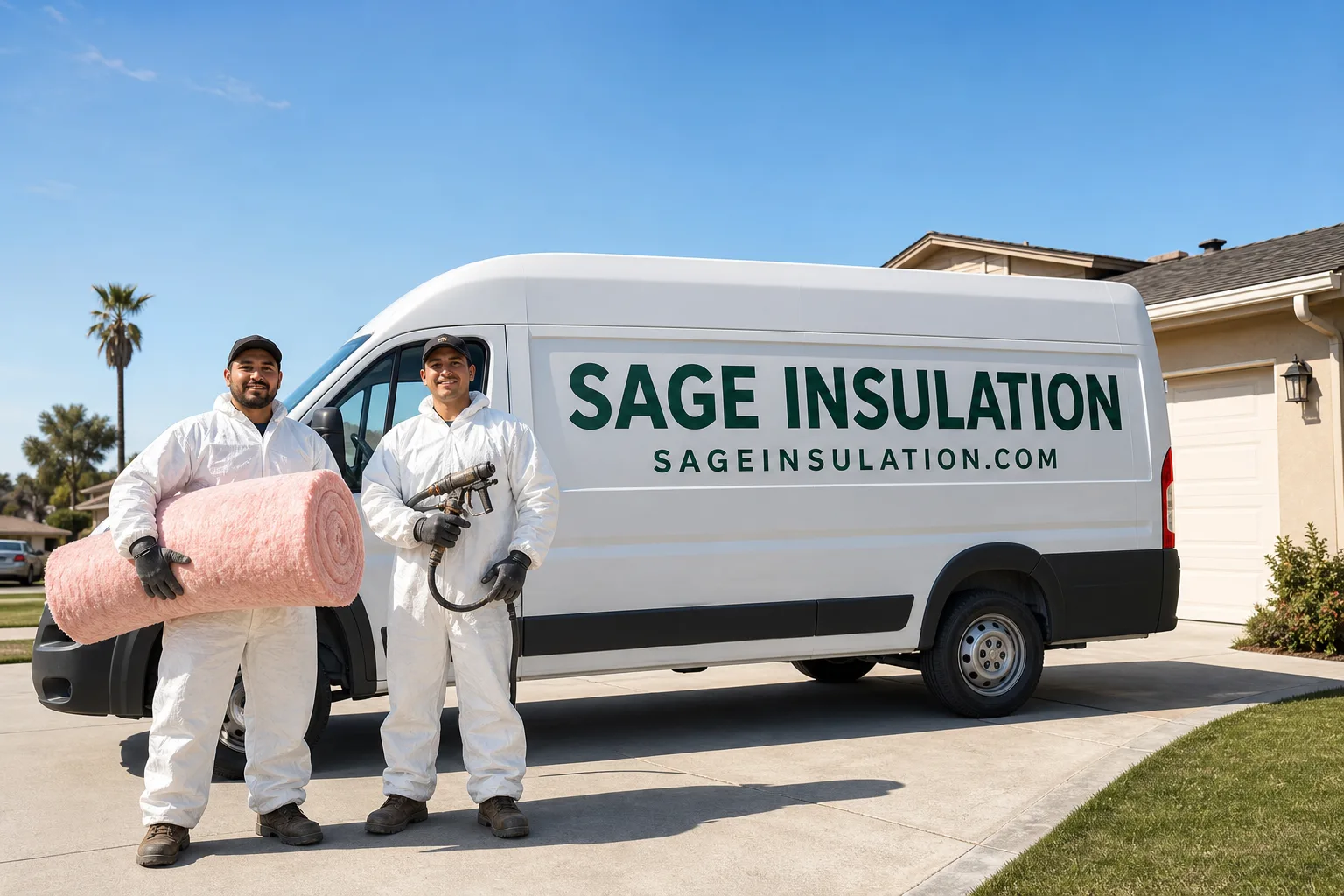
Fast, Reliable Spray Foam Insulation Across West Covina
Spray foam insulation in West Covina runs $2.50 to $6.50 per board foot installed, with most open-cell attic jobs landing between $2,800 and $7,200 depending on square footage and prep work. We’re in West Covina weekly, and we know exactly what these 1950s – 1970s tract homes throw at an insulation crew. If your attic ventilation is original and buried under settled fiberglass, we’ll tell you before we spray anything, because foam over blocked vents makes the problem worse. Call (855) 360-9333 for a free estimate and we’ll come out to your West Covina home, usually within one to two business days.
Why Sage Insulation Is West Covina’s Preferred Spray Foam Insulation Company
Alan Herrera founded Sage Insulation on a simple idea: the right insulation for the home, not the product we happen to have most of. That matters in West Covina, where the housing stock is predictable enough that a local specialist should know what’s behind the drywall before they arrive. We carry Icynene and Demilec spray foam systems, plus Owens Corning, Johns Manville, Knauf, Rockwool, CertainTeed, and GreenFiber, so when a West Covina homeowner asks whether open-cell or closed-cell is right for their attic, we recommend from real product knowledge, not a single-brand sales script.
Our crews work regularly in the 91790 and 91791 ZIP codes and know the tract layouts, the venting quirks, and the access challenges these homes share. West Covina customers don’t get a trainee with a hose on their first call. They get a material-agnostic assessment, a straight answer about whether spray foam is even the right move, and a written estimate with no pressure. Alan’s been clear with the whole team: if blown-in or batts would perform better for a specific West Covina house, that’s what we recommend.
Crawl Space Spray Foam Insulation in West Covina
Crawl Space Spray Foam Insulation in West Covina typically costs $1,800 to $4,200 for a standard single-story tract home, depending on access clearance and whether we’re sealing the rim joists, the crawl space walls, or both. Most West Covina homes built in the 1950s, 1960s, and 1970s have vented crawl spaces under wood-frame floors, and those vent openings let San Gabriel Valley heat pour in during July and let the 40-degree winter nights bleed through the floorboards. Closed-cell foam on the crawl space walls and rim joists shuts that down at the source.
Rim Joist Sealing
The rim joist is the wood band sitting on top of the foundation where the floor framing meets the perimeter. In West Covina’s older homes, these cavities are rarely sealed, which means unconditioned outside air flows straight into the floor system. Spraying closed-cell foam into each rim joist bay stops that air movement and adds structural rigidity to the floor framing.
Crawl Space Wall Encapsulation
Some West Covina homeowners want more than rim joists done. Encapsulating the crawl space walls with closed-cell foam converts a vented, dusty, rodent-accessible crawl into a conditioned, sealed space. It changes how the whole first floor feels in summer, especially in homes where the original fiberglass between floor joists has sagged or gone missing entirely.
Garage Spray Foam Insulation in West Covina
Garage Spray Foam Insulation in West Covina runs $1,200 to $3,400 for a standard attached two-car garage, with the final number driven by whether we’re foaming just the ceiling, the exterior-facing wall, or the entire garage envelope. West Covina’s single-story tract homes almost always have attached garages with uninsulated drywall ceilings and bare stud walls. That garage becomes a heat sink from about 10 a.m. to 7 p.m. in summer, and that heat migrates into the adjoining living space through the shared wall and the interior door.
Garage Ceiling Foam
Open-cell foam on the garage ceiling slows heat transfer from the garage attic into the garage itself. For West Covina homes where the garage attic connects to the main attic space, ceiling foam plus proper ventilation correction can drop garage temperatures by 15 degrees or more on a 100-degree day.
Attached Garage Shared Wall
The wall between the garage and the house is often the biggest thermal leak in a West Covina tract home. We foam the garage-side stud bays with open-cell to create an air seal and add an R-value layer, which directly reduces the load on the HVAC system in the adjacent bedroom or hallway.
Trusted Brands We Service in West Covina
Sage Insulation installs and services spray foam systems from Icynene and Demilec, which means West Covina homeowners get two competing foam chemistries to choose from instead of one brand pushed as the only option. We also stock Johns Manville and Knauf for batt replacement projects and Rockwool for fire-rated or sound-control applications where foam isn’t the answer. For West Covina jobs specifically, we keep common foam rig parts, hose fittings, and replacement nozzles on our trucks so a minor equipment issue doesn’t turn into a rescheduled appointment. You’re not waiting on a distributor shipment from out of state.
Common Spray Foam Insulation Problems We See in West Covina Homes
- Foam sprayed over blocked 1960s attic vents. The original low-pitch attic vents in 91790 and 91791 tract homes are often undersized and buried under settled fiberglass. If foam goes in without clearing and adding ventilation first, the attic traps San Gabriel Valley heat and the shingles fail early.
- Foam on top of compacted original fiberglass. We see this constantly: a previous contractor sprayed foam directly over collapsed fiberglass batts without removing them or air sealing the top plates. The foam can’t cure properly against loose debris, and the thermal barrier is compromised from day one.
- Unsealed garage and crawl space penetrations. Pipe chases, electrical runs, and plumbing penetrations in West Covina’s older homes were never sealed. Even a great spray foam job on attic surfaces won’t stop air movement if the garage and crawl space openings stay open.
- Overheating attics with no thermal barrier strategy. In West Covina’s San Gabriel Valley heat, an attic can hit 140°F by mid-afternoon. Foam on the roofline without a plan for venting and air movement makes it worse, which is why our first step is always ventilation correction, not foam application.
Pricing for Spray Foam Insulation in West Covina, CA
Open-cell spray foam in West Covina runs $2.50 to $4.00 per board foot, while closed-cell runs $4.50 to $6.50 per board foot. A typical 1,200-square-foot attic in a 91790 tract home runs $3,000 to $5,800 for open-cell, including top plate air sealing and ventilation correction where needed. Crawl space jobs run $1,800 to $4,200, garage ceilings run $1,200 to $3,400, and rim joist sealing alone starts around $900 to $1,800. The single biggest cost variable in West Covina is prep: homes with original fiberglass, blocked vents, or inaccessible crawl spaces require more labor before any foam goes in. Call (855) 360-9333 and we’ll give you an exact number after a walkthrough, not a guess over the phone.
We Also Serve Cities Near West Covina
Our Spray Foam Insulation crews cover West Covina and the surrounding San Gabriel Valley communities including Valinda, South San Jose Hills, La Puente, and Avocado Heights. If you’re in any of these areas and need an honest assessment of your attic, crawl space, or garage, call (855) 360-9333 and we’ll schedule a walkthrough. See our West Covina page for service area details and response times.
Serving West Covina, CA — Our Local Coverage Area
We’re based in the West Covina area and know this community well. Use the map below to see our service coverage — if you’re nearby, we can almost certainly help.
FAQs About Spray Foam Insulation in West Covina
Yes, in most 1950s – 1970s West Covina tract homes, the original attic vents are undersized and often buried under old fiberglass, so we clear or add ventilation before spraying any foam. Skipping this step traps 100-degree San Gabriel Valley heat in the attic and can damage the roof deck. Call (855) 360-9333 and we’ll check your vents during the free estimate.
No, we remove compacted original fiberglass batts and air seal the top plates before spray foam goes in. Foam sprayed over settled fiberglass can’t form a proper thermal or air barrier, and the old material keeps shedding particles into the attic air. We’ll quote the removal and disposal as part of the job.
Because the attached garage in a West Covina single-story tract home acts as a heat sink that pushes 100-degree summer heat into the adjacent living space through the shared wall and interior door. Foaming the garage ceiling and the shared wall reduces that heat transfer and lowers the load on your air conditioner. Most garage jobs run $1,200 to $3,400.
Yes, a vented attic doesn’t stop air movement through the crawl space below the house, and West Covina’s 40-degree winter nights pull cold air up through the floor system. Closed-cell foam on the crawl space walls and rim joists seals those pathways and makes the first floor noticeably warmer. We see this pay off most in the 91790 and 91791 tract neighborhoods.
Yes, both open-cell and closed-cell spray foam are rated for sustained high attic temperatures well above what West Covina’s 140-degree attic peaks reach in July and August. The real failure point is a bad installation over blocked vents or settled fiberglass, which is why we correct ventilation first. For a free inspection of your West Covina attic, call (855) 360-9333.
A Real West Covina Job We Still Think About
On a 1962 single-story tract home near the 91790/91791 line, we found the original fiberglass batts collapsed to a couple of inches and the soffit vents packed solid with old insulation dust. After clearing and adding vent area, our crew sprayed Icynene in the attic plane and sealed the top plates, then foamed the attached garage ceiling and crawl space access to stop the valley heat and winter drafts from moving into the house. The homeowner’s attic temps dropped and the 40s winter nights stopped bleeding through the floors. That’s the job every West Covina homeowner with a 1960s tract house needs, whether they know it yet or not.
Written by Alan Herrera, Owner at Sage Insulation, serving West Covina and the San Gabriel Valley.