Fast, Reliable Attic Insulation Across Mayflower Village
Attic insulation in Mayflower Village usually means retrofitting a postwar ranch that never had enough insulation to begin with. Homes here were built between the 1940s and 1960s, when energy was cheap and ceiling cavities were often left with a thin layer of mineral wool that has since collapsed into dust. A properly insulated attic in this part of the San Gabriel Valley changes how the whole house feels in August, when attic temperatures climb past 130°F. Our crews work throughout Mayflower Village regularly, so we know the tract layouts, the typical framing, and the county permitting path by heart. If your upstairs rooms bake in summer and your heat pump runs nonstop, call (855) 360-9333 for a free estimate. We’ll walk your attic with you and explain what we’re seeing.
Why Sage Insulation Is Mayflower Village’s Preferred Attic Insulation Company
Mayflower Village sits in unincorporated Los Angeles County, which changes how every insulation job gets papered. There’s no city building department here. Permits route through the County under Title 24 energy standards, and that means the R-value documentation on your project has to be right the first time. Alan Herrera, who leads our crews, has walked enough of these attics to know the difference between a permit-ready jobsite and one that’s going to stall. We don’t just blow in material and leave. We check what’s already up there – and in Mayflower Village, that often means degraded original insulation and wiring that predates modern code.
Our work in and around Mayflower Road, along Duarte Road, and through the 91006 zip code has taught us one thing: every one of these ranches is slightly different. Some have gable vents. Some have none. Some still have the original shake under a composition roof. That’s why we carry eight manufacturer lines – Owens Corning, Johns Manville, Knauf, and Rockwool among them – so the recommendation matches the house, not whatever’s on the truck. We’re material-agnostic. The house tells us what it needs.
Know Your Options: Attic Insulation in Mayflower Village
This page covers the full picture, but if you want a broader look at methods and materials, our Attic Insulation team publishes detailed guides on every install type we offer. For Mayflower Village specifically, two services come up more than any other: radiant barrier and attic cleaning. The climate and the housing stock drive that. But first, understand what’s likely sitting above your ceiling right now.
Homes built here in the 1940s through 1960s were typically insulated with a loose mineral wool or no insulation at all. The vented attic was standard practice: soffit vents at the eaves, maybe a gable vent at each end. What nobody anticipated was how hot a composition-shingle roof over an uninsulated attic would get during an inland summer. Attic temperatures above 130°F are routine. That heat soaks through the ceiling into living space, and your AC fights it for hours after sunset. The fix isn’t just more material. It’s the right material, installed with air sealing, and often paired with a radiant barrier against the roof deck.
Radiant Barrier in Mayflower Village
Radiant barrier is the first thing we recommend for many Mayflower Village ranches because the problem here is predominantly solar gain, not winter heat loss. A radiant barrier is a reflective foil mounted to the underside of your roof rafters. It reflects radiant heat back toward the roof deck instead of letting it radiate down into the attic. In a hot, dry climate like ours, that can cut attic temperatures by 20 to 30 degrees on a summer afternoon. For a single-story ranch with a low-pitched roof and a large attic footprint, the surface area is significant, and the effect is immediate.
How It Works in a Postwar Ranch
Most Mayflower Village homes have vented attics with accessible rafter bays. We staple or fasten the foil to the underside of the rafters, leaving an air gap between the foil and the roof deck. That gap is what makes it work. Without it, the foil just conducts heat. With it, the foil reflects the roof’s radiant heat back up and out through ridge or gable vents. On a 1,200-square-foot ranch, a Mayflower Village radiant barrier install typically runs $1,500 to $2,800 depending on attic access, rafter spacing, and whether we’re also replacing existing insulation.
Pairing It With New Insulation
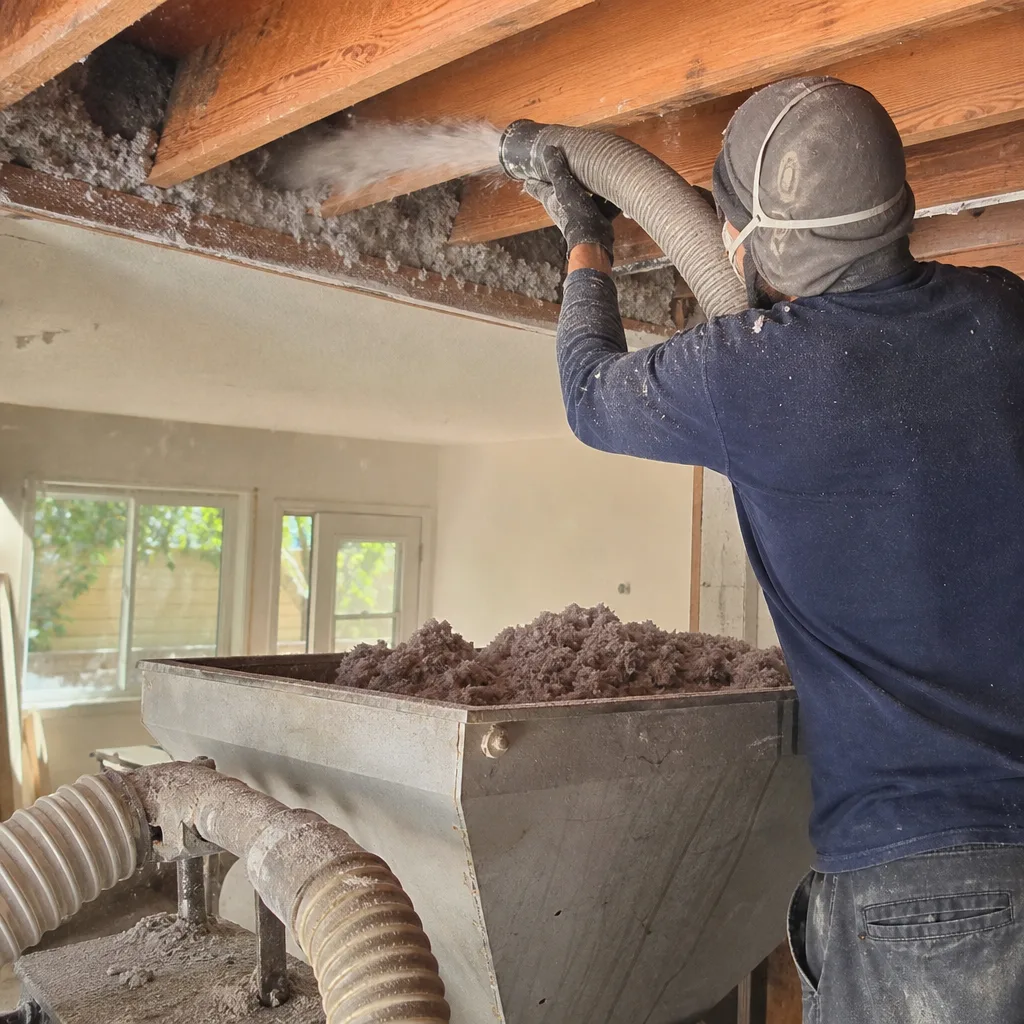
Most homeowners combine a radiant barrier with a blown-in insulation upgrade. The foil handles radiant heat. The insulation handles conductive heat. Together they drop the ceiling temperature noticeably and reduce the load on your AC. For Mayflower Village specifically, we often see houses where the original insulation has settled to R-4 or worse. Adding cellulose to R-38 or R-49 while a radiant barrier reflects the roof heat is the most effective combination we can install.
Attic Cleaning Services in Mayflower Village
Attic cleaning services in Mayflower Village are frequently a prerequisite for insulation work, not an add-on. Decades of dust, rodent droppings, old nesting material, and degraded insulation fibers accumulate up there. If the original mineral wool has broken down, it’s not doing its job and it’s polluting the air you breathe. Cleaning means removing the old material completely, vacuuming the ceiling joists and top plates, and sanitizing the space before any new insulation goes in. A Mayflower Village attic cleaning typically runs $800 to $1,800 depending on attic size, contamination level, and accessibility.
Why You Don’t Just Blow Over the Top
In Mayflower Village specifically, there’s a strong reason to pull old material instead of topping it off. Many of these attics still contain exposed knob-and-tube wiring. If you blow new cellulose over the top, you bury that wiring and hide a fire hazard. Pulling the old material first lets us see what’s up there. On one postwar ranch off Mayflower Road, our crew pulled out collapsed mineral wool and found live knob-and-tube running through the ceiling cavity. We flagged it for an electrician before any new material went in. That’s not a step we skip.
One Trip, Done Right
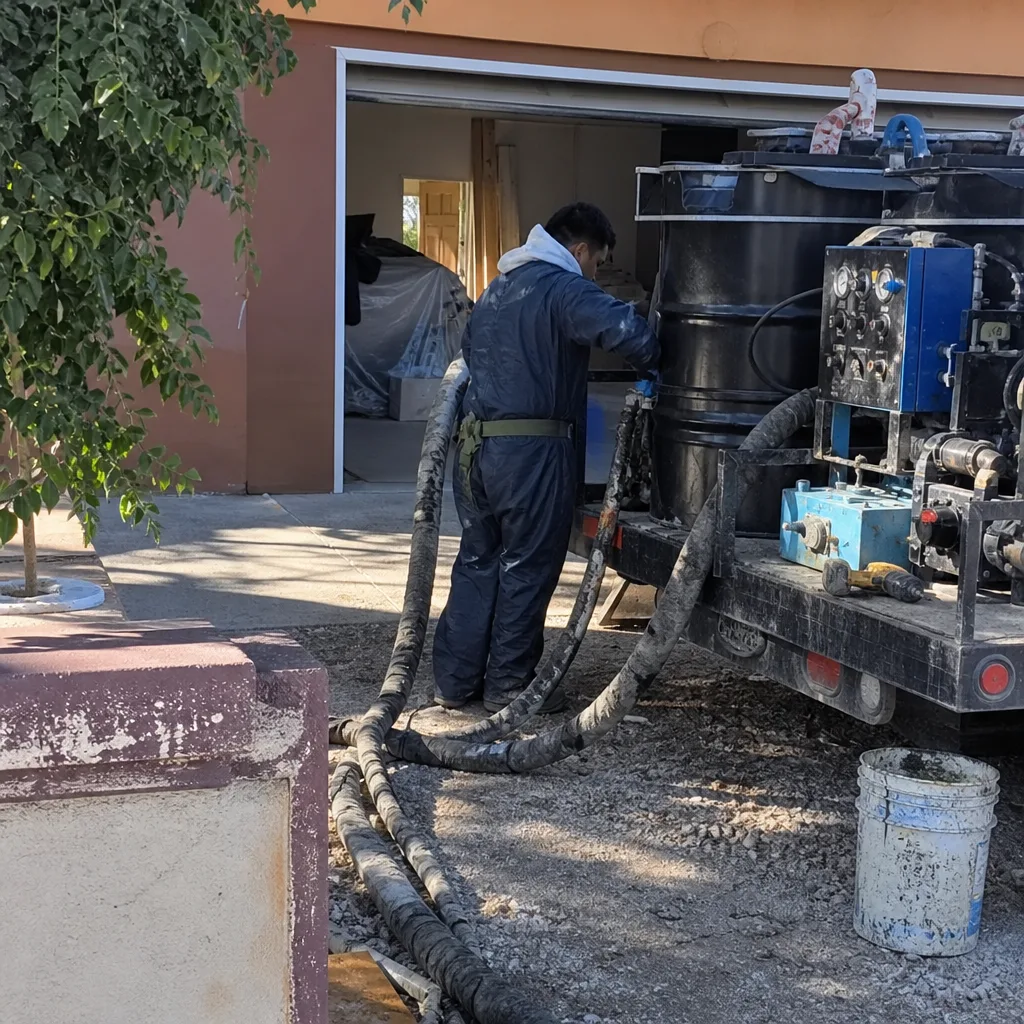
We know Mayflower Village homeowners don’t want multiple service drives. That’s why we stage work carefully. On that same Mayflower Road job, the homeowner wanted it finished in one trip. We staged the radiant-barrier foil and the attic cleaning the same morning, then air-sealed the top plates and blew in GreenFiber to hit the county’s Title 24 R-value target by early afternoon. One trip. No second service drive. That’s how it should work out here.
What happens when you call
- 1
A real person answersNo phone trees — you reach a local pro.
- 2
You get an upfront price rangeHonest numbers before anyone is dispatched.
- 3
A background-checked tech heads outLicensed & insured, dispatched right away.
- 4
You approve before work beginsNothing starts until you say go.
Trusted Brands We Service in Mayflower Village
Sage Insulation carries eight manufacturer lines, so the product recommendation always fits the house. Our Mayflower Village installs commonly use Owens Corning for fiberglass batts in attic sidewalls, Johns Manville for blown-in fiberglass where weight matters, Knauf for budget-conscious R-value upgrades, and Rockwool mineral wool where fire resistance and sound control matter. We also install Icynene and Demilec spray foam for air-sealing applications, and GreenFiber recycled cellulose for homeowners who want the eco-conscious option without paying a premium. The point isn’t brand loyalty. It’s fit. A Mayflower Village attic with knob-and-tube concerns might be better served by Rockwool’s fire rating. A homeowner who wants maximum recycled content might choose GreenFiber. We stock local parts and keep material staged for Mayflower Village jobs, so turnaround is fast.
Common Attic Insulation Problems We See in Mayflower Village Homes
- Degraded original insulation under new material. Many Mayflower Village attics got a cheap blow-in decades ago directly over collapsed mineral wool. The old stuff compresses, the new stuff can’t perform, and the R-value you think you have isn’t there. We pull it all and start clean.
- Skipped air sealing around top plates and penetrations. Santa Ana winds push hot, dry air straight through unsealed gaps where interior walls meet the attic. Insulation without air sealing just filters the air, it doesn’t stop it. We seal plates, wire penetrations, and plumbing chases before blowing anything in.
- Guessed R-values on county-permitted jobs. Because Mayflower Village has no city inspector, some contractors shortcut the Title 24 documentation and under-insulate. We document everything and match the county’s required R-value on paper and in the attic.
- Blocked or inadequate venting. Original gable vents on 1940s and 1950s ranches are often undersized or partially blocked by old insulation. A hot attic needs airflow. We clear vents, repair baffles, and make sure the roof can breathe before we layer in new material.
Pricing for Attic Insulation in Mayflower Village, CA
A typical full attic insulation job in Mayflower Village runs $1,800 to $4,500 for a 1,000 to 1,500-square-foot ranch, including removal of degraded old material, air sealing, and new blown-in insulation to Title 24 R-value targets. Attic cleaning alone runs $800 to $1,800. Radiant barrier installs run $1,500 to $2,800. Attic batt insulation replacement, where we remove old batts and install fresh fiberglass, runs $1,200 to $2,400. Attic insulation top-up, where the existing material is still sound, runs $600 to $1,200. What moves the number: attic accessibility, contamination level, whether wiring needs to be flagged and addressed first, and whether you’re combining services in one trip. Call (855) 360-9333 for a free estimate. We’ll give you a written number before any work begins.
We Also Serve Cities Near Mayflower Village
Our crews work throughout the San Gabriel Valley, so if you’re in Arcadia, North El Monte, Temple City, or East Pasadena, the same material-agnostic approach applies. Each city has its own building department, its own code quirks, and its own housing stock. Read our Attic Insulation in Mayflower Village page for the specifics on how this community works under county jurisdiction.
Serving Mayflower Village, CA — Our Local Coverage Area
We’re based in the Mayflower Village area and know this community well. Use the map below to see our service coverage — if you’re nearby, we can almost certainly help.
FAQs About Attic Insulation in Mayflower Village
No. Mayflower Village is unincorporated, so there is no city building department. Attic insulation permits route through Los Angeles County under Title 24 energy standards. That means your project’s R-value documentation and inspection path differ from a neighboring incorporated city like Arcadia or Temple City. We handle the county paperwork on every Mayflower Village job, so you don’t have to navigate that process alone. Call (855) 360-9333 if you want to know what your specific attic requires.
Because many of these postwar houses still contain exposed knob-and-tube wiring in the attic, and blowing new insulation over the top hides that wiring permanently. If the wiring is live and degraded, that’s a fire hazard buried under cellulose. Pulling the old material first reveals what’s actually up there. We’ve flagged wiring for electricians on multiple Mayflower Village jobs before touching a blower.
Los Angeles County’s Title 24 energy standards call for R-38 to R-49 in most vented attics, depending on the climate zone and the existing assembly. In practice, most Mayflower Village homes we walk through are sitting at R-4 to R-10 from the original install. We bring them up to the county requirement and document it properly for the permit record. That paper trail matters here because there’s no city inspector to catch a shortcut.
Yes, for most Mayflower Village homes it’s one of the highest-return upgrades we install. A single-story ranch has a large roof area relative to its living space, and that roof soaks up intense inland sun all summer. A radiant barrier under the rafters reflects that heat back out through the vents and can drop attic temperatures by 20 to 30 degrees, reducing the heat that soaks through your ceiling. It works especially well when paired with new blown-in insulation.
Yes. That’s our standard approach in Mayflower Village. We stage the job so the old material comes out, the wiring gets inspected by sight, top plates and penetrations get sealed, and the new insulation goes in the same day. We bring enough crew and equipment to finish it in one trip, because nobody in this community wants to schedule two service visits for one attic. Call (855) 360-9333 and tell us your attic story. We’ll give you a plan and a price.
Contact Sage Insulation for Attic Insulation in Mayflower Village
If your Mayflower Village attic is under-insulated, overheated, or still carrying its original mineral wool, we’d like to walk it with you. Alan Herrera leads the crew. We carry eight trusted brands – Owens Corning, Johns Manville, Knauf, and Rockwool among them – and we’ll recommend the material that fits your house, not the one we’re incentivized to sell. Free estimates. Written pricing. County-compliant documentation. Call (855) 360-9333 today and get on the schedule.
Written by Alan Herrera, Owner at Sage Insulation, serving Mayflower Village and the San Gabriel Valley.