
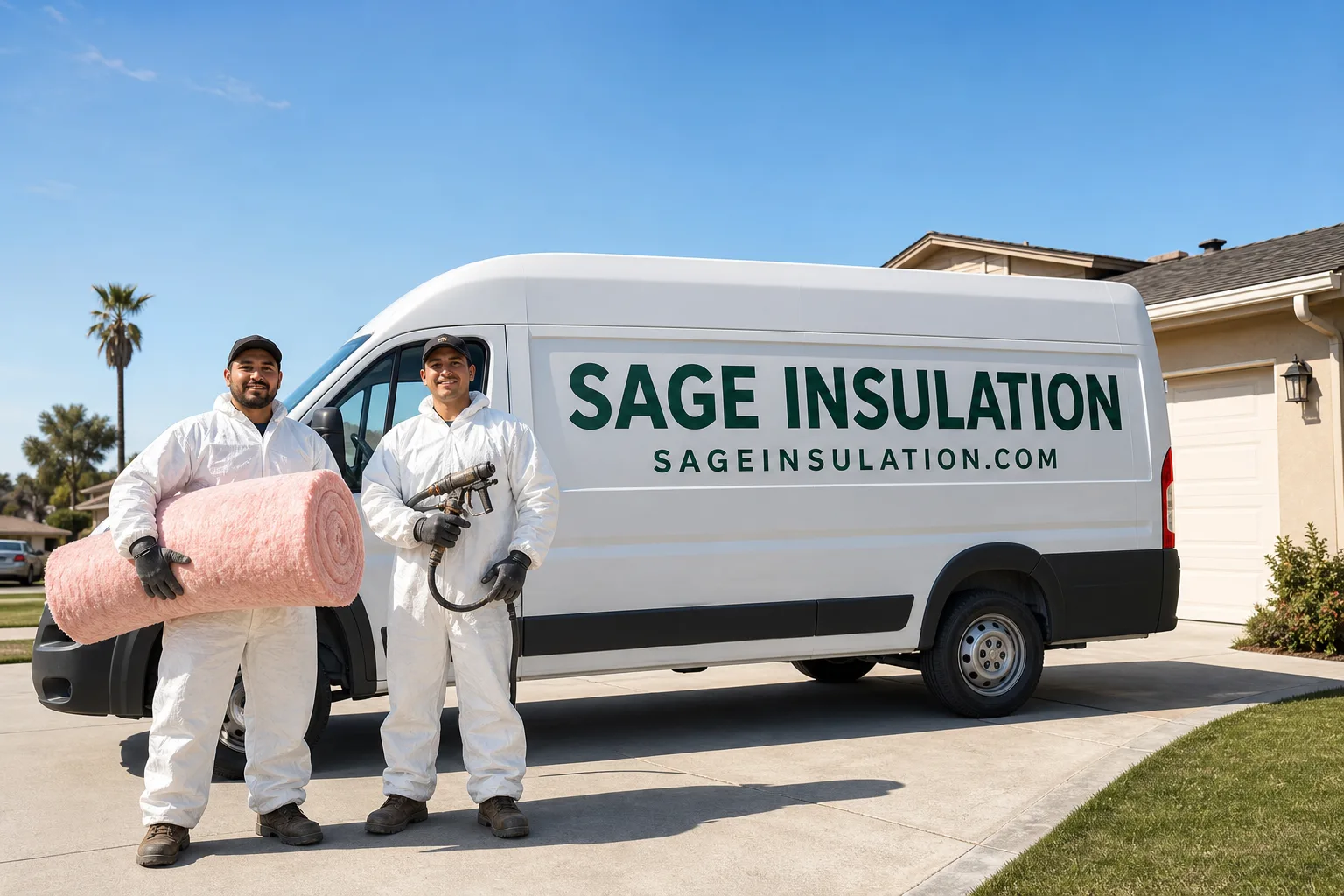
Fast, Reliable Attic Insulation Across San Marino
Most San Marino attics weren’t insulated to modern standards when they were built, and many haven’t been touched since the Eisenhower administration. What that means in practical terms: rooms that bake in August, cold drafts in December, and an HVAC system cycling constantly while your utility bill climbs. Sage Insulation has worked in San Marino long enough to know the difference between a straightforward top-up and a full retrofit requiring Cultural Heritage Commission coordination. We carry eight brand lines so the recommendation reflects what your home actually needs. Call (855) 360-9333 for a free estimate, and we’ll have a technician at your door within 24 to 48 hours.
Why Sage Insulation Is San Marino’s Preferred Attic Insulation Company
Our work in San Marino runs the full range: 1920s Spanish Colonials on Lorain Road, mid-century ranch-style homes near Lacy Park, and 1950s traditionals off Huntington Drive. Homeowners here tend to ask harder questions than most, because the houses deserve it. A 1930s plaster-walled Mediterranean near The Huntington isn’t the same job as a 1960s tract home in Alhambra, and the insulation approach shouldn’t be the same either.
We’re material-agnostic. That’s not a slogan. It means when we walk into a San Marino attic with settled loose-fill and original knob-and-tube, we can recommend blown-in GreenFiber cellulose through small access holes because we stock it and we install it daily. If a vaulted ceiling needs closed-cell spray foam from Icynene or Demilec, we’re licensed and experienced with both foam chemistries. The recommendation follows the house, not our inventory. Alan Herrera, who leads our San Marino projects personally, has spent years learning what this city’s older homes can handle and what they can’t. You’ll see that in the details: clean access holes patched behind crown molding, ventilation baffles aligned with original roof geometry, air-sealing that never comes near live knob-and-tube without proper isolation.
Radiant Barrier in San Marino
Radiant Barrier in San Marino does one specific job well: it blocks radiant heat from entering the attic through the roof deck, which matters more on a 95-degree August afternoon than most people realize. If you’ve ever stood in a San Marino attic in summer and felt like you opened an oven, that’s radiant heat. A foil-faced radiant barrier stapled to the underside of the roof rafters reflects that heat back out before it ever reaches your insulation. The material cost for a typical 1,800-square-foot San Marino attic runs $1,400 – $2,600 installed, depending on whether we’re doing the main attic only or also treating gable ends and complex roof transitions.
Where It Helps Most
Radiant barrier makes the biggest measurable difference on older Mediterranean and Spanish Colonial homes with tile or flat roofing tiles that soak up sun all day. When the roof deck radiates that stored heat downward, your insulation becomes a sponge fighting a losing battle. A barrier cuts attic temperatures by 20 to 30 degrees during peak heat, which drops the temperature of the air leaking into your living space through light fixtures, ceiling penetrations, and walls.
What We Install
We pair radiant barrier with your existing or new Attic Insulation. It’s not a substitute for R-value. The barrier handles radiant heat; the insulation handles conductive and convective heat. Together they reduce HVAC load in summer months, and we often recommend the combination for San Marino homes with finished second stories that warm up dramatically by 4 p.m.
Attic Cleaning Services in San Marino
Attic Cleaning Services in San Marino usually means more than removing dust. In this city’s older homes, it means extracting 60 years of blown-in cellulose or fiberglass that’s compressed, contaminated by rodent droppings, or wet at the edges from condensation. San Marino attics from the 1920s through the 1950s frequently have original loose-fill settled to two inches or less, with old knob-and-tube wiring running through the joist bays. You can’t just blow new insulation over that. The old material has to come out, the cavities get inspected, and only then do we talk about what goes back in. Full attic cleaning with removal and disposal on a typical San Marino home runs $900 – $1,800.
Before New Insulation Goes In
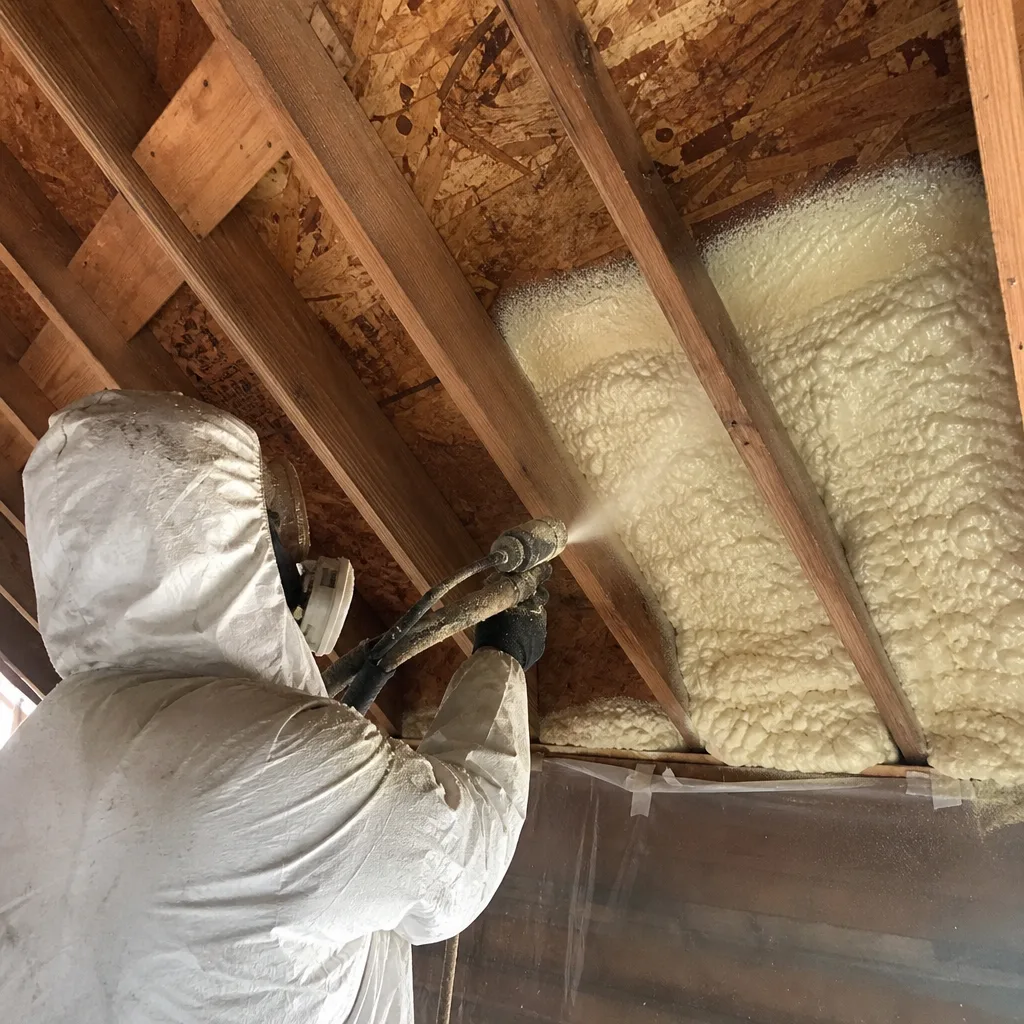
We clean attics before every retrofit, not just when you ask for it. A layer of new fiberglass over old raccoon-nested cellulose is a health issue and a performance failure. Our crew uses HEPA-filtered vacuums that run to a truck-mounted unit outside, so dust never re-enters your living space. For homes near The Huntington Library and Gardens, where historic collections live steps away, that containment matters.
What Cleaning Uncovers
Removing old insulation almost always reveals problems you didn’t know about: cracked top plates, failed junction boxes, dried-out vent boots, or unsealed chase ways that have been leaking conditioned air for decades. We document what we find and send you photos. You decide what gets fixed. We don’t bury existing problems under 14 inches of new material and call it a day.
What happens when you call
- 1
A real person answersNo phone trees — you reach a local pro.
- 2
You get an upfront price rangeHonest numbers before anyone is dispatched.
- 3
A background-checked tech heads outLicensed & insured, dispatched right away.
- 4
You approve before work beginsNothing starts until you say go.
Trusted Brands We Service in San Marino
Sage Insulation is not locked into any single manufacturer’s program, which means the product we recommend is the product that fits your house. For a 1930s Spanish Colonial in San Marino, that might be Rockwool mineral wool batts, which resist moisture and carry a strong fire rating. For a 1950s ranch with an open attic floor, a blown-in blanket of Owens Corning fiberglass or GreenFiber recycled cellulose makes more sense. For a raised ceiling with no venting, an open-cell Icynene spray foam application gets the air-sealing right. We stock all three of those brands, plus Johns Manville, Knauf, CertainTeed, and Demilec, and we keep the common batt sizes and blower materials on our local trucks so we’re not running back to a supply house mid-job. For San Marino customers, that means quicker turnarounds and no substitution surprises.
Common Attic Insulation Problems We See in San Marino Homes
- Settled loose-fill over knob-and-tube. Original cellulose or early fiberglass from the 1940s and 1950s has compressed to a fraction of its original R-value, and in many San Marino homes it sits directly on top of active knob-and-tube circuits. Insulating over live knob-and-tube is a fire risk. We isolate the wiring pathways and only then apply insulation, usually dense-packed cellulose that won’t settle.
- Plaster cracking from uncontrolled blowing pressure. Historic plaster walls and ceilings in Spanish Colonial and Mediterranean homes can’t absorb the pressure from a standard blower nozzle. We use smaller-diameter hoses and controlled fill rates, then patch access holes behind original moldings so the finished surface looks untouched.
- Condensation in complex rooflines. San Marino’s cool, damp winters create condensation in attics that lack proper ventilation, especially in houses with intersecting gables and shallow roof pitches. We see sheathing rot and wet insulation in these areas regularly. The fix is often baffles, better ridge and soffit venting, and careful air-sealing before insulation goes in.
- HVAC ductwork that’s doing more harm than good. Many older San Marino homes have duct runs through unconditioned attics, and they leak. When the ducts leak, your conditioned air goes into the attic, your attic pulls in outdoor air, and any insulation upgrade underperforms. We check duct conditions on every insulation project and flag what we find.
Pricing for Attic Insulation in San Marino, CA
Every San Marino attic is different, but here are the ranges we quote most often. A basic attic insulation top-up over existing material in a 1,500-square-foot home runs $1,300 – $2,200. Full blown-in attic insulation with removal of old material and air sealing in a 2,000-square-foot home ranges from $3,800 – $6,500. Attic cleaning alone runs $900 – $1,800. Radiant barrier installation adds $1,400 – $2,600 for a typical attic here. Dense-packed cellulose into historic walls, when needed, adds $2,500 – $4,500 depending on access. What drives cost: roof complexity, accessibility, knob-and-tube isolation, Cultural Heritage Commission review timelines, and whether we’re working around original plaster that can’t be disturbed. Call (855) 360-9333 and Alan can walk you through what your specific house would need. Estimates are free, and the number is itemized, not a one-line surprise.
We Also Serve Cities Near San Marino
Our Attic Insulation in San Marino clients often ask whether we cover neighboring areas. We do. Our crews work regularly in San Gabriel, East San Gabriel, Alhambra, and East Pasadena. If you live just across the San Marino border, you get the same material-agnostic approach and the same access to our full brand line. The drive is short; the standards are the same.
Serving San Marino, CA — Our Local Coverage Area
We’re based in the San Marino area and know this community well. Use the map below to see our service coverage — if you’re nearby, we can almost certainly help.
FAQs About Attic Insulation in San Marino
Yes, in many cases, if your San Marino home is designated as architecturally or historically significant, or lies within a designated historic district. The city requires Cultural Heritage Commission review before exterior changes, and while interior insulation work typically falls outside that scope, any project that affects exterior stucco, rooflines, or visible building elements may need approval. We coordinate directly with the city on your behalf. That means we handle the paperwork, the review scheduling, and the follow-up requirements. Call (855) 360-9333 and we’ll tell you in the first conversation whether your house falls under review.
No, not safely. We will not blow or place insulation directly over live knob-and-tube circuits. The wires need open air around them to dissipate heat, and burying them in cellulose or fiberglass creates a genuine fire hazard. In San Marino attics from the 1920s through the 1940s, knob-and-tube is common. We assess every circuit, identify which lines are still active, and either work around them with proper clearance or recommend a licensed electrician to address the wiring before insulation goes in. It’s not a corner we’re willing to cut, and you shouldn’t accept a bid from anyone who says otherwise.
For a 1920s Spanish Colonial in San Marino with original plaster walls and an accessible attic, blown-in cellulose from GreenFiber is usually the strongest fit. It dense-packs well, it has a higher fire rating than loose fiberglass, and it can be installed through small access holes patched behind original moldings. It does not require tearing out plaster. If the attic has a low-pitch or complex roofline, closed-cell spray foam from Icynene or Demilec may be better because it handles both insulation and air-sealing in one pass. The honest answer is that the house decides. We bring the material options and a diagnostic mindset, not a default product.
We prevent condensation by air-sealing and ventilating before we add insulation. Condensation happens when warm, moist indoor air reaches a cold surface inside the attic assembly. In older San Marino homes, that moisture typically migrates through gaps around light fixtures, plumbing chases, and unsealed top plates. We seal those pathways first. Then we make sure the attic has working ridge and soffit venting so any remaining moisture has an exit. On complex rooflines where standard venting is hard to configure, we recommend spray foam applied directly to the roof deck, which stops condensation by removing the cold surface entirely.
Yes, we clean the attic before every installation in San Marino. That includes removal of old insulation, rodent debris, and settled dust using HEPA-filtered extraction that keeps particulates out of your living space. The range is $900 – $1,800 for a typical San Marino attic, and you can book it as a standalone service or as part of a full retrofit. We don’t recommend blowing new insulation over compromised old material; it wastes money and hides problems. Call (855) 360-9333 and we’ll schedule a free walkthrough.
Call Sage Insulation for Attic Insulation in San Marino
If your San Marino attic is underinsulated, overheated, or hasn’t been touched in decades, let’s get it right. We’ll inspect, diagnose, and give you an honest recommendation, whether that’s a simple top-up or a full historic-home retrofit with all the care that requires. Call (855) 360-9333 for your free estimate, or ask for Alan directly. We serve all of San Marino, including 91108 and 91118, and we’re usually on site within two days.
Written by Alan Herrera, Owner at Sage Insulation, serving San Marino and surrounding communities.