
Icynene Attic Insulation in Downey: A Homeowner’s Guide
Most Downey homeowners researching Icynene start with the wrong question. They ask, “What’s the R-value?” when they should be asking, “Does my attic actually need what this foam does well?” Icynene open-cell spray foam runs about R-3.7 per inch, which is lower than closed-cell foam and roughly on par with blown fiberglass. Its real value in a Downey attic has almost nothing to do with raw thermal resistance. It’s about air sealing, sound control, and the option to convert your vented attic into conditioned space. If you’re weighing insulation options for your Downey home and want straight answers before spending thousands, call us at (855) 360-9333 for a free estimate. Otherwise, keep reading – this guide explains exactly where Icynene makes sense and where it’s the wrong tool.
What Icynene Actually Delivers in a Downey Attic
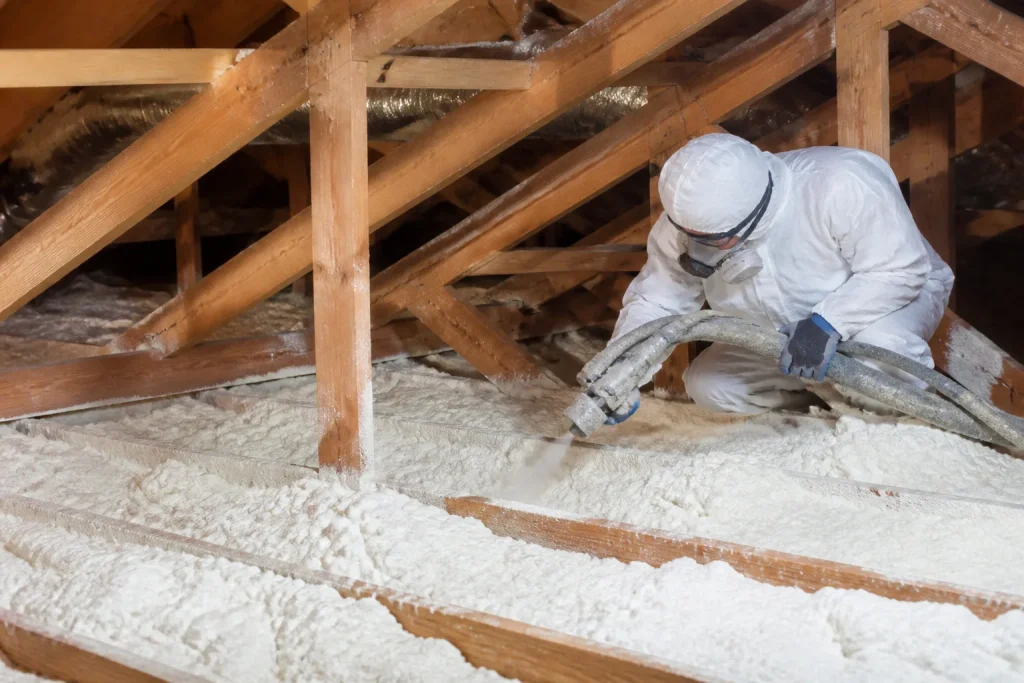
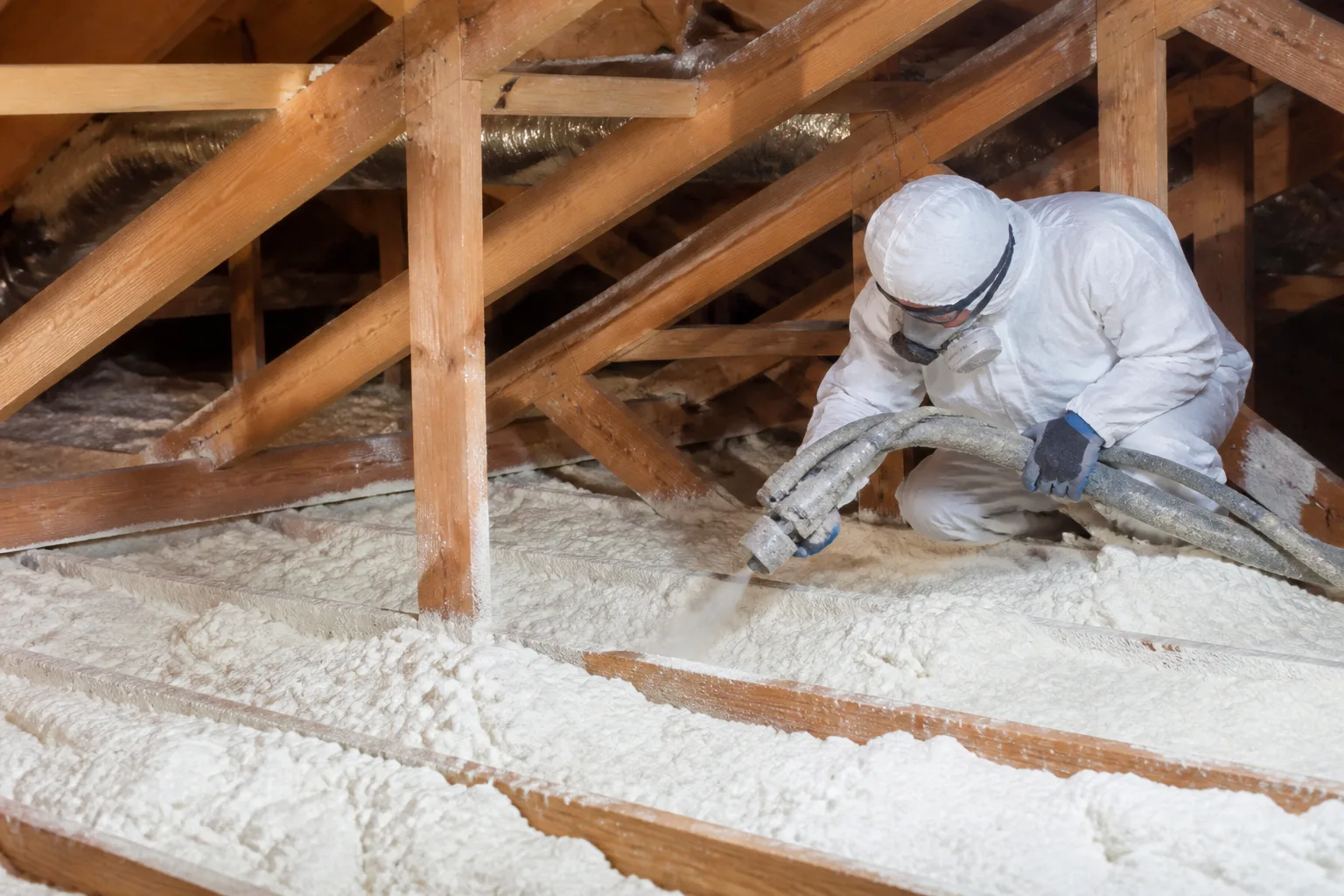
Icynene’s open-cell spray foam is a soft, flexible material that expands to fill gaps, cracks, and irregular cavities. In a Downey attic, where roof lines cut through soffits, recessed lights poke into the ceiling plane, and plumbing vents snake through top plates, this expansion matters more than the foam’s R-value per inch.
Here’s what the material genuinely does well in this climate:
- Air sealing at penetrations. Downey homes built in the 1950s through the 1980s are full of gaps around can lights, wiring chases, and framing joints. Foam fills these spaces completely, stopping the stack effect that pulls conditioned air out of your living space and draws 140-degree attic air toward your ceiling in August.
- Sound attenuation. Open-cell foam absorbs noise. If you live under a flight path near Downey Studios or within earshot of the 105 or 605, a foam-sealed attic noticeably quiets the transfer of outside racket into bedrooms.
- Converting a vented attic to conditioned space. This is the big one. When applied to the underside of the roof deck rather than the attic floor, Icynene can bring the entire attic volume inside the home’s thermal envelope. That changes everything about how your HVAC system performs.
In our experience in Downey, most homes with blown fiberglass attic floors still leak air through the ceiling plane. The insulation slows conductive heat transfer, but it does nothing to stop air movement. Icynene addresses the leak first and the R-value second. That’s the distinction most marketing materials blur.
When Icynene Is the Right Call: The Unvented Attic Strategy
This is the application where Icynene earns its premium in Downey, and it’s the one our Sage Insulation home consultation process evaluates carefully. The strategy: move your HVAC equipment and ductwork into the attic, then spray foam the roof deck so the entire attic becomes conditioned space.
Why does this matter in Downey specifically? Because summer attic temperatures here routinely hit 130 to 150 degrees. If your furnace is in the attic and your flex ducts run through that heat, your air conditioner is fighting a losing battle. Duct leakage in a vented attic means you’re paying to cool air that escapes before it reaches your living room, and the air that does arrive has been warmed by the superheated attic.
When we apply Icynene to the roof deck:
- Attic temperatures drop from 130-plus degrees to within a few degrees of the conditioned space below.
- HVAC equipment operates in a stable environment, reducing runtime and extending equipment life.
- Duct leakage stops mattering as much, because leaked air stays inside the thermal envelope.
- You gain usable, clean storage space in the attic.
This is a genuine performance upgrade, not just an insulation swap. It’s also where open-cell Icynene outperforms closed-cell foam on value. You don’t need the vapor-retarding properties of closed-cell foam on the underside of a properly detailed roof deck in Southern California. The open-cell product air-seals just as effectively at half to two-thirds the installed cost of closed-cell.
Where Open-Cell Icynene Underperforms in Downey
Here’s where we earn our keep as a material-agnostic contractor. Icynene open-cell foam is permeable to moisture vapor. That’s a design feature in some assemblies and a liability in others. In certain Downey attic configurations, we recommend against it.
Low-slope roofs with moisture drive risk. If your home has a flat or very low-pitch roof, especially with older torch-down or built-up roofing, open-cell foam applied to the deck can trap moisture. Exterior leaks that would normally dry upward through a vented attic now have nowhere to go. The moisture migrates into the foam and, more importantly, into the roof sheathing. Rot follows. Closed-cell foam, or a vented assembly, is the safer play here.
Attics over unconditioned garages. Many Downey homes have a mix of conditioned living space and unconditioned garage under the same roof line. If the attic spans both, air sealing the entire roof deck while the garage below remains unconditioned creates a muddled thermal boundary. You’ll pay to condition air above the garage for no occupant comfort benefit.
Any application where vapor permeability is a liability. We’ve seen a handful of Downey attics with recurring moisture issues tied to bathroom exhaust fans venting into the attic rather than through the roof. Before any foam goes on, the house has to be right: exhaust fans terminated properly, roof leaks fixed, ventilation needs addressed. Foam is not a bandage for existing moisture problems. It makes them worse.
If you’re comparing methods, our spray foam insulation in West Athens page covers the broader open-cell vs. closed-cell decision process. The principles apply identical to Downey homes.
Honest Cost Comparison: Icynene vs. Blown Fiberglass in Downey
Let’s put numbers on the table. In Downey’s current market, Icynene open-cell spray foam installed on an attic floor or roof deck typically runs three to four times the cost of blown fiberglass per square foot. For a 1,500-square-foot attic, you’re looking at a multi-thousand-dollar difference.
What does that premium buy you? Not more R-value per dollar. Blown fiberglass at R-38 on an attic floor costs far less per unit of thermal resistance than Icynene at any thickness. The premium buys air sealing. It buys the option to condition the attic. It buys noise reduction. It buys a product that won’t settle or degrade over three decades.
The payback math in Downey works like this:
- Attic floor application, HVAC in the conditioned space below: Icynene rarely justifies its premium. Blown fiberglass or blown cellulose, properly air-sealed first, delivers most of the performance at a third of the cost. We say this as contractors who install Icynene every month.
- Attic floor application, HVAC and ducts in the attic: The math shifts. Duct leakage and equipment heat gain eat into your savings with any floor insulation. Foaming the floor helps, but foaming the roof deck is the better fix.
- Unvented attic conversion, HVAC in the attic: This is where Icynene wins. The energy savings from moving ductwork into 80-degree conditioned air instead of 140-degree vented air show up on your bill within the first summer. We’ve seen Downey homeowners cut their peak-season cooling load meaningfully after this conversion, without increasing insulation R-value anywhere else.
We carry Icynene alongside Demilec spray foam, blown-in insulation options like GreenFiber cellulose and fiberglass from Owens Corning and Johns Manville. The recommendation should fit the house, not the other way around. If you’d like us to price both approaches for your specific Downey attic, call (855) 360-9333.
Questions to Ask Any Contractor Recommending Icynene in Downey
If another contractor has quoted you Icynene and you want to verify the recommendation is sound, here’s the checklist we use ourselves when reviewing an attic:
- “Is this attic a candidate for an unvented, conditioned assembly?” If the answer is yes, Icynene on the roof deck makes sense. If the answer is no, ask why foam is being recommended on the attic floor instead of a high-performance blown product.
- “What vapor retarder does this assembly require?” Open-cell foam is vapor-permeable. In most Downey roof decks, that’s fine. But the contractor should be able to explain why without mumbling.
- “How will the roof sheathing dry if a leak occurs?” An unvented foam-sealed roof deck has different drying dynamics than a vented attic. The contractor should have a direct answer.
- “Is there any existing moisture, mold, or ventilation problem that gets addressed before foam goes on?” If the answer skips this step, walk away.
- “What’s the installed depth and R-value target for this specific attic?” Icynene open-cell typically gets installed at 5.5 to 6 inches in a roof deck cavity (about R-20 to R-22). That satisfies Downey’s code requirements for most assemblies, but your specific roof structure matters.
We’ve pulled foam out of a Downey garage attic last year where a previous contractor sprayed the roof deck without addressing a vented gable end. The gable vent stayed open, the attic never actually conditioned properly, and the homeowner paid a premium for a system that leaked conditioned air to the outside. The fix was straightforward: close the vent, re-foam the opening, and suddenly the attic behaved as designed. That’s not a sales pitch. It’s a caution about whoever holds the spray gun.
If you want a second opinion on a quote you’ve received, to compare methods, or just to understand your options, our attic insulation service pages walk through each method in detail. Or call us – we’ll talk through your attic configuration over the phone at no charge.
The Bottom Line
Icynene open-cell spray foam is a specific tool for specific Downey attic problems. It’s not a universal upgrade. If your HVAC lives in a vented attic and your summer bills are brutal, an unvented attic conversion with Icynene is one of the highest-impact improvements you can make. If your attic insulation is just old and settled and your HVAC is in a conditioned closet, blown insulation delivers more value per dollar. A good contractor tells you the difference before quoting anything.
If you’re in Downey and need help sorting this out, Sage Insulation offers free estimates on attic insulation, spray foam insulation, and blown-in insulation. We carry Icynene, Demilec, Owens Corning, Johns Manville, Knauf, Rockwool, CertainTeed, and GreenFiber – so the recommendation is driven by what your attic actually needs, not what we happen to have on the truck. Call (855) 360-9333 to schedule a free attic assessment.
Frequently Asked Questions
It depends entirely on your attic configuration. In Downey, Icynene open-cell foam typically costs three to four times what blown fiberglass does per square foot. The premium is justified when you’re converting a vented attic to conditioned space, especially if your HVAC equipment and ducts are in the attic. It’s harder to justify for a basic attic floor insulation upgrade where blown fiberglass or cellulose delivers similar thermal performance for far less money.
Icynene open-cell spray foam provides approximately R-3.7 per inch. At a typical 5.5-inch installation depth on a roof deck, that’s around R-20 to R-22. Closed-cell spray foam runs R-6 to R-7 per inch. Blown fiberglass and cellulose installed on an attic floor typically reach R-30 to R-38. What Icynene provides that blown products don’t is continuous air sealing at every gap and penetration.
If Icynene is going on the attic floor, existing insulation must be removed first. If it’s going on the underside of the roof deck, old floor insulation can often be left in place or removed for storage access. The roof deck application is the more common scenario in Downey homes where homeowners want to condition the attic space or move HVAC into it.
Icynene open-cell spray foam, properly installed, maintains its air-sealing and thermal properties for the life of the building. It won’t settle, sag, or degrade like blown or batt insulation can. The main risks are not age-related but moisture-related: if the roof leaks and water is trapped in the assembly, the foam can hold moisture against the sheathing. That’s why proper roof condition assessment before installation matters in Downey’s climate.
Written by the team at Sage Insulation, serving Downey since 2018.
Need Insulation Help?
Call Sage Insulation — licensed & insured, here with fast after-hours help in Downey.
(855) 360-9333