
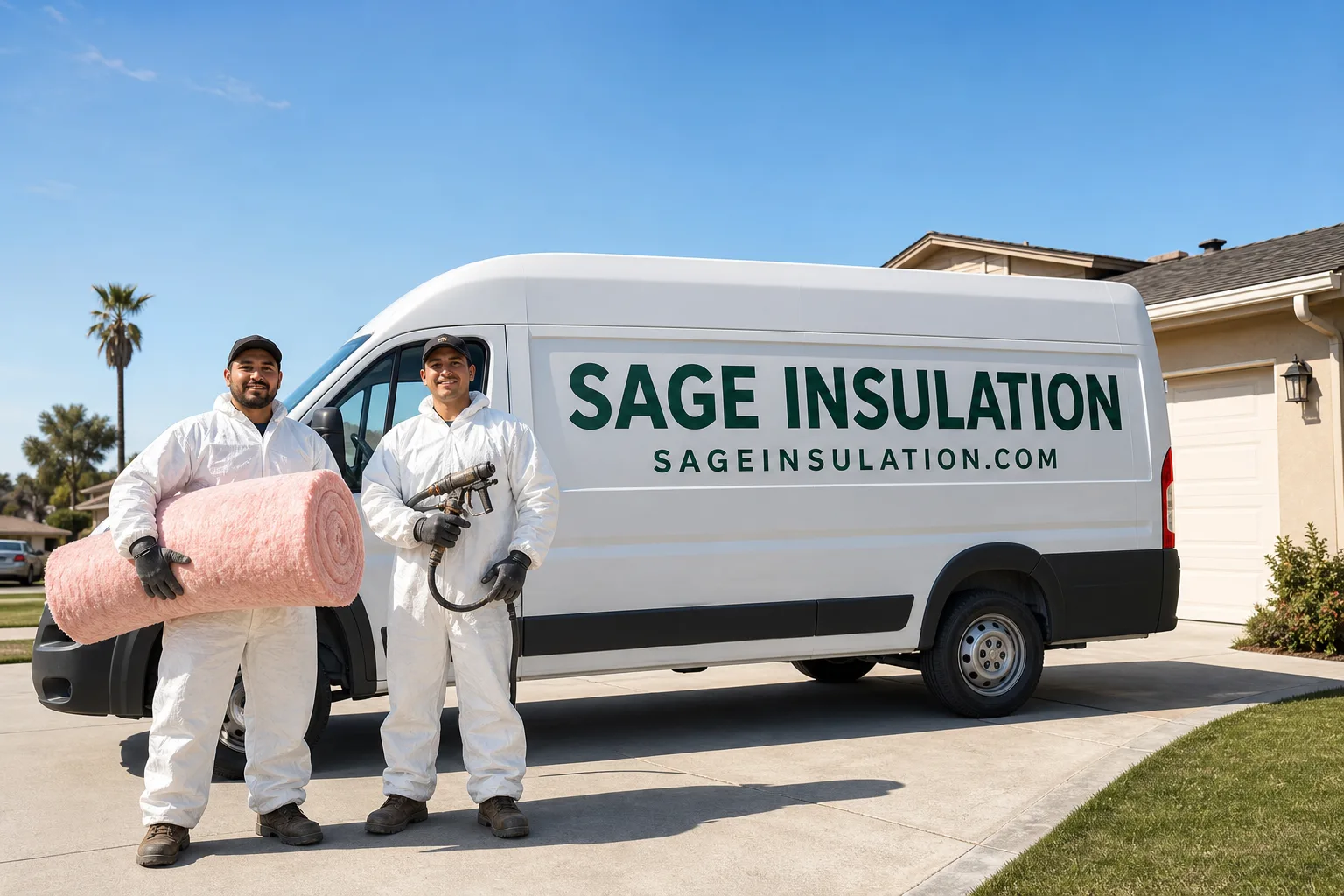
Fast, Reliable Spray Foam Insulation Across Artesia
Spray foam insulation in Artesia typically runs $2.80 to $5.50 per square foot installed, which means a typical rim joist job lands between $900 and $2,100 while a full wall cavity retrofit on a 1,200-square-foot ranch runs $6,500 to $9,800. Most Artesia jobs are completed in a single day, though full retrofits can stretch to two. We know Artesia’s streets, its tight lots, and the particular way fog settles into the attics of its 1950s tract homes. If you’re noticing cold walls, persistent drafts, or condensation dripping from recessed lights on foggy mornings, call us at (855) 360-9333 for a free estimate. We’re based in Downey and can usually be at an Artesia home within 24 to 48 hours.
Why Sage Insulation Is Artesia’s Preferred Spray Foam Insulation Company
Artesia homeowners call us because we show up with answers, not a sales pitch for one product line. We carry eight insulation brands including Johns Manville, Knauf, and Rockwool, and we install across every major method: attic insulation, blown-in insulation, and spray foam. That means when we walk through an Artesia ranch off Pioneer Boulevard, we’re evaluating the actual problem in front of us, not trying to make that problem fit whatever’s on the truck.
Much of our work in the city comes from referrals. Someone on a street off 183rd has us air-seal and spray their rim joists, then a neighbor down the block calls because they noticed the difference in how the house feels. We’re familiar with the original construction details in Artesia’s tract homes, from the shallow 2×4 wall cavities to the low-pitch roof decks that make attic access a squeeze. That’s not generic contractor talk. It’s what we see on nearly every job in the 90701 and 90702 zip codes.
When we say we respond quickly to Artesia, we mean it. Alan Herrera runs our crews with a focus on showing up when we say we will. If you call (855) 360-9333 on a Tuesday, we can typically have someone out for a diagnostic look by Thursday. Schedules flex, but we don’t let Artesia jobs sit for a week while the marine layer keeps doing its work on an unsealed attic.
Spray Foam Wall Insulation in Artesia
Spray foam wall insulation in Artesia is a retrofit process where we remove a strip of interior drywall or work from the exterior sheathing to inject slow-rise foam into the 2×4 wall cavities that Artesia’s postwar homes were built with. The original framing left roughly 3.5 inches of cavity, an R-value target we can hit with closed-cell foam or exceed with a hybrid approach of foam and a dense-pack fill. The first sentence of any conversation about these walls should be about moisture, though, not just R-value.
When These Walls Need It
A homeowner near Artesia Park called us after noticing that the west-facing bedroom never warmed up, even with the heat cycling. That’s a classic sign of settled or missing insulation in the wall cavities. In Artesia’s marine-layer climate, heat loss is only half the problem. The bigger issue is that cool, humid air works its way through gaps in the sheathing, condenses on the back of the drywall, and slowly feeds mold or mildew inside the cavity. Closed-cell foam stops that air movement while adding structural rigidity to older framing.
What It Costs Here
A full wall-cavity spray in a typical 1,100 to 1,400 square-foot Artesia ranch runs from $6,500 to $11,000 depending on how many rooms are opened up. Partial jobs, like a single bedroom or a bump-out addition, run $1,400 to $3,200. We carry Johns Manville and Knauf spray foam lines, both closed and open cell, so the recommendation is based on the wall assembly, not a brand contract.
Rim Joist Spray Foam in Artesia
Rim joist spray foam is the highest-impact insulation upgrade we perform in Artesia homes, dollar for dollar. The rim joist is the band of framing where the floor meets the foundation wall, and in a 1950s tract house off 183rd this area was often left with a thin fiberglass batt that has since slumped to nothing. Artesia’s foggy mornings push damp air straight into that gap, and the result is cold floors along exterior walls, musty crawl space smell, and HVAC equipment working harder than it should be. Sealing the rim joist with closed-cell foam cuts that air infiltration at the source.
Why It Matters More Here
Because the marine layer delivers moisture rather than extreme heat, Artesia homes see more comfort problems from air leaks at the rim than from hot attic air pushing down. We’ve done jobs where sealing and spraying the rim joist alone dropped the homeowner’s floor temperature variance by several degrees. When we apply closed-cell foam to the rim, we’re creating a thermal and air barrier at the exact point where conditioned indoor air meets the damp crawl space air coming off the South Bay fog.
What Artesia Homeowners Pay
A typical Artesia rim joist job covers the full perimeter of the crawl space, or roughly 120 to 160 linear feet. That runs $900 to $2,100, and we get it done in a single morning. When we’re already on site for attic work, adding rim joist foam is one of the smartest things an Artesia homeowner can do, because the crawl space drafts undermine the work done above. Demilec closed-cell foam is our standard go-to for this application.
Trusted Brands We Service in Artesia
We stock and install spray foam systems from Icynene and Demilec, both open-cell and closed-cell formulations. For homes where fiberglass, mineral wool, or cellulose is the better fit, we carry Johns Manville batts, Rockwool mineral wool, CertainTeed products, Knauf materials, and GreenFiber recycled-content cellulose. Having all of them available means we’re not forcing a square peg into a round hole when we stand in an Artesia attic and look at what’s actually there. Parts, material, and equipment are staged at our Downey shop, so Artesia jobs don’t wait on supply-chain days.
Common Spray Foam Insulation Problems We See in Artesia Homes
- Sagged 1950s-70s attic batt with condensation drip-through. Original fiberglass batts in Artesia’s shallow attics have compacted over decades. Fog-morning moisture condenses on the cold roof deck, drops onto the compressed batt, and wicks through unsealed top plates and recessed can lights. Air sealing must happen before any new insulation goes in.
- Over-applied open-cell foam in vented attics. Open-cell foam is vapor-permeable, which means humid South Bay air can pass through it and hit a cold roof deck. In Artesia’s persistently damp mornings, this creates the exact condensation the homeowner was trying to stop. We specify closed-cell for most Artesia rim joist and wall work, and only use open-cell where the assembly is designed for it.
- Thin or skipped rim joist coverage. Tight Artesia crawl spaces make rim joists a pain to reach, and some contractors skip the far corners. Coastal damp then wicks into the wall cavities directly above those missed sections. We inspect every linear foot before we spray.
- Low-pitch attic access problems. Many Artesia ranches have roof pitches around 3/12 or 4/12, leaving barely enough room to crawl. Spraying evenly in a 22-inch clearance takes patience, and a rushed crew will leave gaps or overshoot. We bring drop cloths, proper lighting, and the right rig to work in those conditions without cutting corners.
Pricing for Spray Foam Insulation in Artesia, CA
Here’s what you should expect to pay in Artesia. Open-cell spray foam runs $1.80 to $3.00 per board foot on attic or wall applications. Closed-cell runs $2.80 to $5.50 per board foot. A rim joist perimeter job runs $900 to $2,100. A full attic spray with closed-cell on a 1,200-square-foot ranch starts around $4,500 and goes to $7,800. Wall cavity retrofits run $6,500 to $11,000 for a full home. Garage ceiling sprays run $1,500 to $3,500. Roof deck applications on low-pitch Artesia roofs run $4,000 to $9,000 depending on access. The biggest variable is whether the existing insulation needs removal first. We’ll measure, run the numbers, and give you a written estimate before any work starts. Call (855) 360-9333 and ask for one.
We Also Serve Cities Near Artesia
While this page focuses on Artesia, our crews regularly work just over the city lines in Cerritos, La Palma, Hawaiian Gardens, and Norwalk. If you’re in one of those cities and need Spray Foam Insulation work done, the same crews and material-agnostic approach apply. For a closer look at our work across the city, see Spray Foam Insulation in Artesia.
Serving Artesia, CA — Our Local Coverage Area
We’re based in the Artesia area and know this community well. Use the map below to see our service coverage — if you’re nearby, we can almost certainly help.
FAQs About Spray Foam Insulation in Artesia
Artesia sits in the South Bay marine-layer band, which means cool, damp air and morning fog are a constant nine months out of the year. That fog drives moisture into vented attics and wall cavities, where it condenses on cold surfaces and drips back through ceilings. Spray foam, specifically closed-cell, acts as an air and vapor barrier at those entry points, so the fog never gets inside the assembly. The thermal benefit is real, but the moisture control is why Artesia homes see such a noticeable comfort change.
No, not in most cases. Original batt insulation in Artesia tract homes has usually compacted, sagged, or absorbed enough moisture over the decades that it’s no longer doing its job. Spraying foam over settled batt traps moisture and creates a new set of problems. We remove the old material, inspect the framing and wiring, air-seal the top plates and any recessed can lights, and then spray. The removal step is why full attic retrofits in Artesia cost what they do, but it’s not optional if you want the result to last.
Yes, when applied correctly. Condensation happens when warm, moist indoor air meets a cold surface, like an uninsulated roof deck or an unsealed top plate. Spray foam air-seals those connection points so the moving air can’t reach the cold surface. In a vented Artesia attic, we also make sure the open-cell foam isn’t over-applied, because that can trap moisture. The fix is sealing the penetrations and then applying the right formulation at the right thickness. Call (855) 360-9333 and we’ll diagnose what’s actually happening at your specific house.
For Artesia’s low-pitch, tight attics, closed-cell foam is usually the right call. It delivers a higher R-value per inch, which matters when you have only 18 to 22 inches of working clearance, and it acts as a vapor barrier against the marine-layer moisture. We use both Demilec and Icynene closed-cell systems depending on the application. For rim joists and wall cavities, closed-cell is the default in Artesia. Open-cell has its place in certain roof deck applications where the assembly is engineered for it, but we don’t default to it just because it costs less per board foot.
Yes, and it changes the whole sequencing. Compact Artesia lots mean narrow side yards, tight access to the crawl space, and often no room to stage equipment in the backyard. Low-pitch roofs mean attic access is usually through a small interior scuttle hole, not a walk-up stair. We plan Artesia jobs around these constraints: smaller equipment rigs, drop cloths through the house, and crews who work in cramped spaces without rushing. The result is the same coverage you’d get on a larger home, but the process has to respect the house you actually have.
Written by Alan Herrera, Owner at Sage Insulation, serving Artesia and the surrounding South Bay communities.
Ready to stop the fog from coming through your attic and walls? Call Sage Insulation at (855) 360-9333 for a free estimate. We’ll walk the house with you, point out what’s actually happening, and give you a number before we ever pick up a hose.