
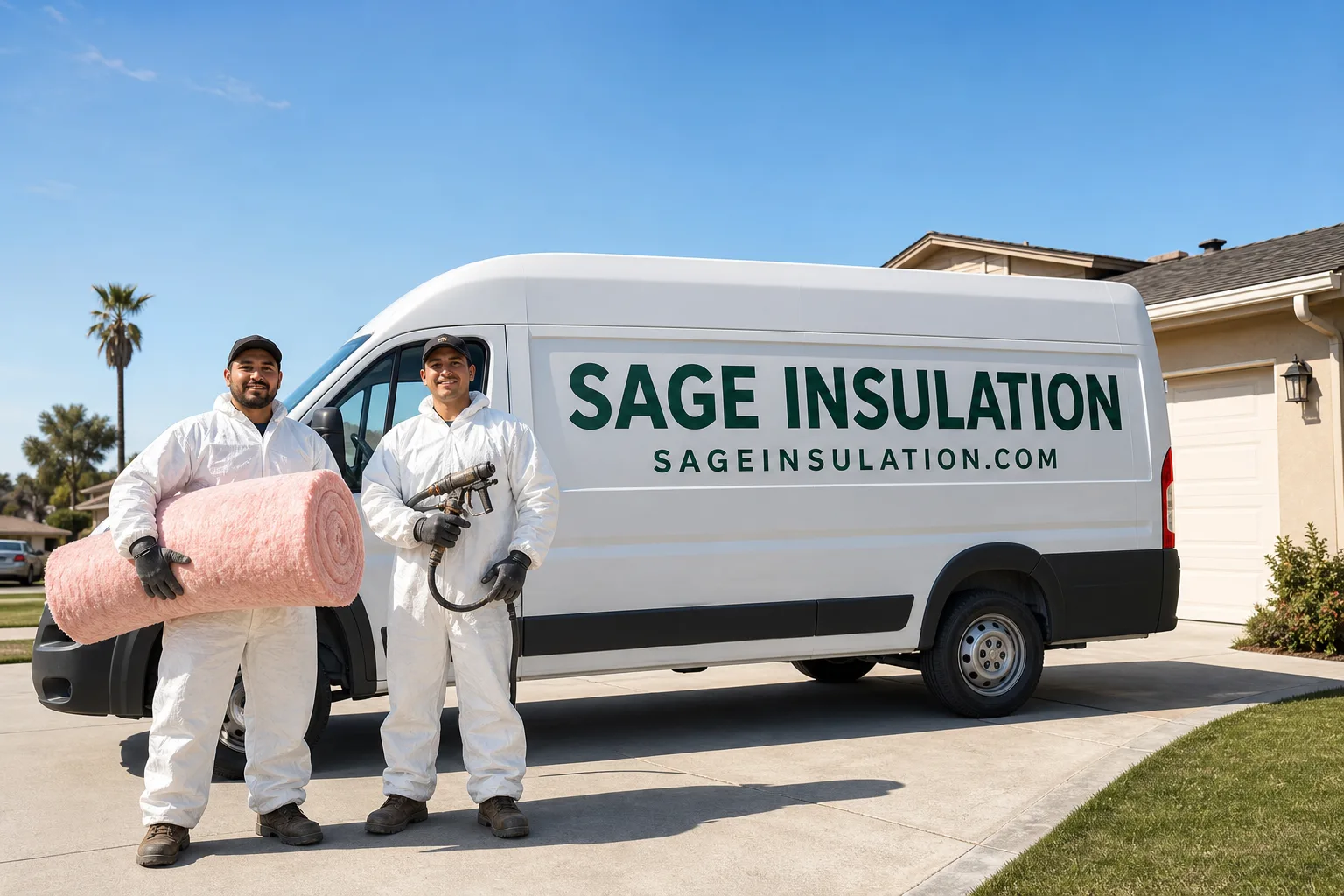
Fast, Reliable Spray Foam Insulation Across Torrance
Spray foam insulation in Torrance does more than fill wall cavities. It seals the gaps where marine-layer air moves through postwar tract homes, carrying salt and moisture into places no fiberglass batt was ever designed to handle. We work throughout Torrance every week, and we know which homes need closed-cell rigidity and which need open-cell forgiveness. If you’re tired of rooms that never hold temperature or an attic that smells like wet newspaper after June gloom burns off, call (855) 360-9333. We’ll give you a straight answer about what your house actually needs.
Why Sage Insulation Is Torrance’s Preferred Spray Foam Insulation Company
Torrance homeowners call us because we don’t show up selling one product. We carry Icynene and Demilec spray foam systems, plus fiberglass and cellulose options, so the recommendation you get reflects what your walls and roofline actually need. No vendor quotas. No “this is what we have on the truck” logic.
Our crews know the difference between a 1950s tract home north of Carson Street and a 1990s build near the South Bay Galleria. The older homes almost never have vapor barriers. The newer ones have tight envelopes that trap coastal humidity. Both fail differently, and both need different prep before foam goes in. Alan Herrera, who leads our team, has made sure every estimator can explain that difference in plain English before you ever sign anything.
Response time to Torrance from our Downey location is typically same-day for estimates and within 1-3 days for installation, depending on scope. For homes with active moisture problems in the attic, we prioritize those calls. Coastal condensation doesn’t wait politely.
Open Cell Spray Foam in Torrance
Open Cell Spray Foam works well in Torrance interior walls and some attic applications where sound control matters as much as temperature. It expands aggressively, fills odd cavities in older framing, and costs less per board foot than closed-cell. In Torrance’s mild climate, open-cell handles the thermal side fine on its own in many walls. The catch is that open-cell is vapor-permeable, which means it lets moisture pass through. In a 1950s tract home with no vapor barrier, that moisture can reach the wood sheathing and sit there. Not every attic should have open-cell foam, and we’ll tell you when it shouldn’t.
Where Open-Cell Fits Best
Interior partition walls in Torrance homes, especially between bedrooms and living spaces, are ideal for open-cell. It dampens sound from traffic on Hawthorne Boulevard or the 405 corridor far better than closed-cell. It also fills irregular framing gaps in midcentury construction without the expansion pressure that can bow old drywall.
When to Skip It
Open-cell without vapor management in a pre-1980 Torrance attic is a mold risk. We’ve pulled open-cell from homes where a previous contractor sprayed it directly against roof decking with no ventilation plan, and the foam had wicked moisture at the wood line all summer. For roofs and rim joists near salt air, closed-cell is usually the right call.
Spray Foam Insulation Contractors in Torrance
Spray Foam Insulation Contractors in Torrance aren’t all the same, and the difference shows up in prep work. Older South Bay homes need fastener inspection, salt-damage assessment, and sometimes remediation before foam ever gets sprayed. We do that work as part of the job, not as a surprise add-on. Our installers are trained on Icynene and Demilec chemistry, so they can switch between open- and closed-cell formulations based on what each cavity needs.
Garage Ceiling and Rim Joist Work
Detached garages are common throughout Torrance, from Seaside to the eastern tract neighborhoods. Spraying the garage ceiling and rim joist keeps vehicle exhaust and damp air from migrating into the house above. Closed-cell foam is our standard recommendation here because it acts as a vapor barrier and adds structural rigidity to older framing.
Prep Before Foam
In Torrance, prep often means removing corroded foil-facing, rusted staples, and damp fiberglass before spraying. Foam bonds poorly to deteriorating substrate. We’ve seen jobs where homeowners paid for spray foam over failing material, only to watch it delaminate within two years. The prep isn’t glamorous, but it’s what makes the foam last.
Trusted Brands We Service in Torrance
Sage Insulation installs spray foam from Icynene and Demilec, and we also work with Knauf, Rockwool, and CertainTeed products for projects where foam isn’t the sole answer. That brand depth matters in Torrance because coastal conditions push some products harder than others. If a specific product isn’t performing well in salt-air homes, we stop recommending it. For Torrance customers, we keep a local stock of common components and can typically turn around material orders within a few days. If you’re comparing quotes, ask which specific foam brand and formulation each contractor plans to use. If they can’t tell you, that’s information too.
Common Spray Foam Insulation Problems We See in Torrance Homes
- Corroded foil-facing and rusted staples: Homes built in the 1940s through 1960s often have original foil-backed insulation held by steel staples. Decades of salt-laden air eats through both, leaving insulation sagging and useless. Foam won’t bond to that surface, so removal comes first.
- Open-cell foam absorbing marine-layer moisture: In older homes without vapor barriers, open-cell foam can pull moisture from coastal air and hold it against wood framing. We see mold at the foam-wood interface most often in attics with inadequate ventilation.
- Foam separation from loose cavity material: As rusted fasteners pop and old insulation settles, spray foam can lose contact with the surface it was applied to. The air seal breaks, and the homeowner is back to square one with condensation on the garage door track below.
- Salt corrosion on HVAC and garage hardware: Spray foam seals the building envelope, but the salt air already inside takes a toll on exposed metal. We recommend stainless fasteners and corrosion-resistant hardware wherever foam meets existing metal components.
Pricing for Spray Foam Insulation in Torrance, CA
Open-cell spray foam in Torrance typically runs $1.20 to $2.10 per board foot installed, while closed-cell runs $2.50 to $4.50 per board foot depending on depth and accessibility. A typical rim joist job in a Torrance garage runs $900 to $2,200. A full attic roofline with closed-cell foam on a 1,200-square-foot single-story usually lands between $4,800 and $9,500. Prep work like removing failed insulation or treating rusted surfaces adds to the total, and we’ll always quote that separately so you know exactly what you’re paying for. Estimates are free. Call (855) 360-9333 and we’ll give you real numbers for your specific house.
We Also Serve Cities Near Torrance
Sage Insulation also works in Lomita, West Carson, Carson, and West Rancho Dominguez. The coastal moisture patterns in Lomita and West Carson mirror Torrance closely, while Carson and West Rancho Dominguez homes often have similar postwar construction with less salt exposure. Wherever you are in the South Bay, our Spray Foam Insulation team can assess your home and recommend the right approach. If you’re in Torrance or a neighboring city, call us and we’ll schedule a visit.
Serving Torrance, CA — Our Local Coverage Area
We’re based in the Torrance area and know this community well. Use the map below to see our service coverage — if you’re nearby, we can almost certainly help.
FAQs About Spray Foam Insulation in Torrance
Torrance attics fail faster because salt-laden marine-layer air corrodes the substrate foam bonds to. Rusted staples, disintegrating foil-facing, and damp fiberglass create a surface that foam can’t grip, so it separates and loses its air seal. The fix is proper prep: removing corroded material, treating surfaces, and choosing the right foam chemistry for the existing vapor profile. Call (855) 360-9333 for an inspection if your attic foam is pulling away from the roofline.
Yes, but not by itself. Spray foam can replace failed fiberglass and create a new air seal, but only after the corroded material is removed and the underlying surfaces are assessed. We recently sprayed a 1950s home near Old Torrance and found the original foil-facing disintegrating with rusted staples failing everywhere. After removing the degraded material, we applied closed-cell foam along the roofline and sealed penetrations with stainless fasteners, which stopped condensation that had been dripping onto the garage door track. The prep is the repair.
Closed-cell spray foam is the best choice for Torrance garages exposed to salt air. It acts as a vapor barrier, adds structural strength to older framing, and doesn’t wick moisture the way open-cell can. For detached garages or garage ceilings below living space, closed-cell is our standard recommendation. Call us for a garage-specific assessment.
Spray foam changes the ventilation equation, especially in Torrance where marine-layer moisture is constant. Closed-cell foam on the roofline creates an unvented attic, which requires the foam to act as the vapor barrier and the air seal simultaneously. Done wrong, moisture gets trapped. Done right, ventilation becomes less about moving air and more about keeping water vapor out. We evaluate each attic’s existing vents and humidity patterns before recommending an approach.
We install Icynene spray foam, along with Demilec systems, and we also work with Knauf, Rockwool, and CertainTeed products where they fit the project. Icynene’s open-cell low-GWP formula works well in Torrance interior walls, while Demilec closed-cell handles coastal rim joists and rooflines. We recommend the brand based on what your house needs, not what we have the most of. Call (855) 360-9333 for a straight answer on what fits your home.
Written by Alan Herrera, Owner at Sage Insulation, serving Torrance and the South Bay since the company’s founding.