
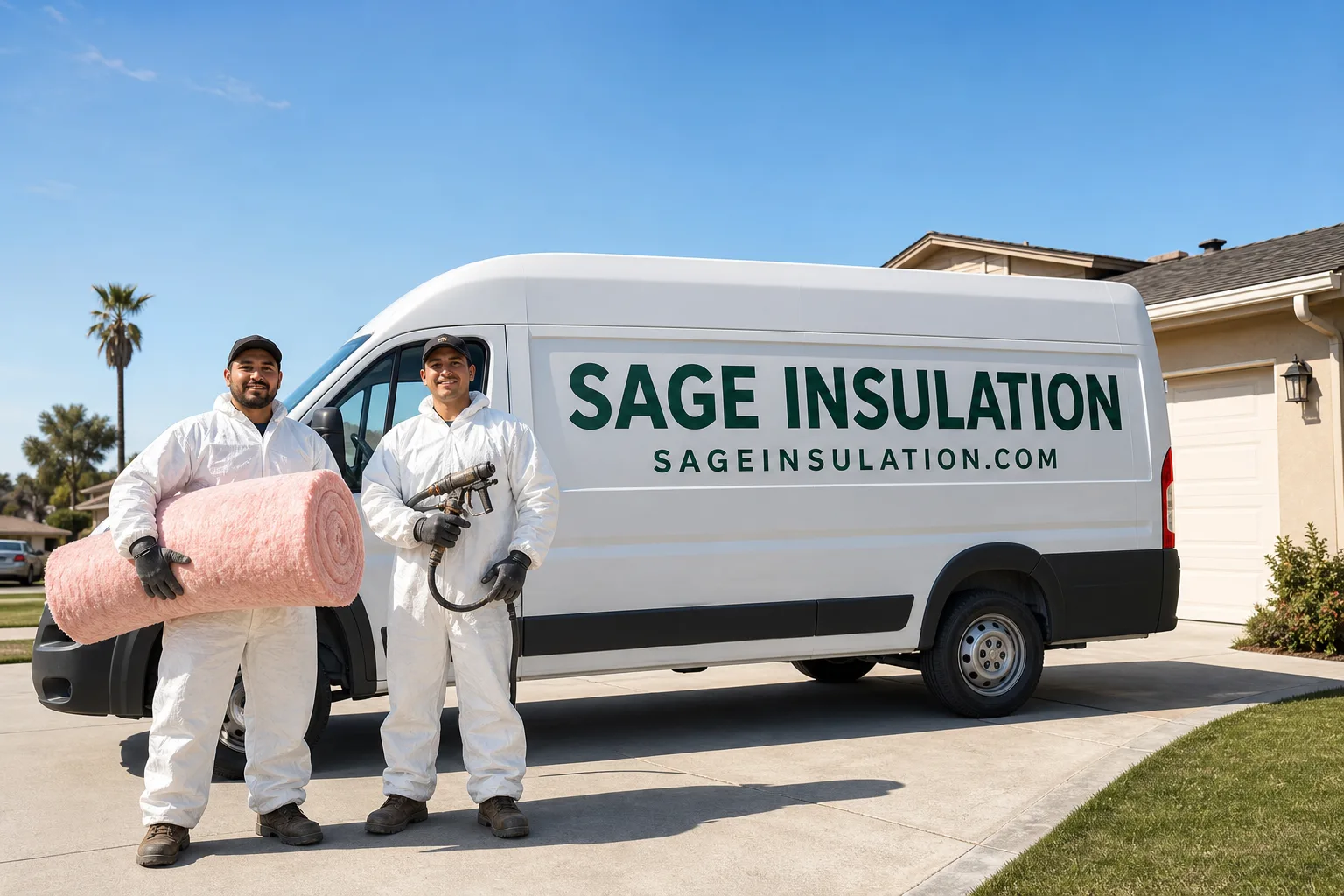
Fast, Reliable Spray Foam Insulation Across Signal Hill
Spray foam insulation in Signal Hill typically costs $3.50 to $7.50 per square foot for open-cell and $5.00 to $10.00 per square foot for closed-cell, with most whole-attic projects landing between $4,800 and $14,000 depending on the home’s roof geometry and access. Most Signal Hill jobs are completed in one to two days once materials are staged. If your attic still holds original 1950s or 1960s insulation, you’re probably losing conditioned air through gaps you can’t see from the living room.
We work Signal Hill streets every week, from the hillside view homes off Skyline Drive to the mid-century tracts near Willow Street and the pockets of apartments along Cherry Avenue. The homes here are different from Long Beach stock. They’re older, tighter to the lot lines, and a surprising number sit on or near former oil-production land. That changes how we approach an attic seal. Call us at (855) 360-9333 and we’ll tell you what applies to your specific parcel before anyone picks up a spray gun.
Why Sage Insulation Is Signal Hill’s Preferred Spray Foam Insulation Company
We’re not a one-brand contractor running a single foam chemistry through every attic. Sage Insulation installs both Icynene and Demilec spray foam systems, open-cell and closed-cell, so the recommendation for your Signal Hill home is driven by what the roof deck and joist bays actually need. Alan Herrera built the company on that material-agnostic principle, and it’s why our crews spend the extra hour diagnosing before spraying.
On a hillside street off the oil-field edge, our crew opened a 1960s tract attic to find the original mineral wool batting collapsed to a few inches and vapor barriers crumbling into the joist bays. Before we could spray, we verified the existing soil-gas venting was clear and unobstructed, then applied closed-cell Icynene against the conditioned-side roof deck to seal out the marine-layer moisture and buffer summer heat gain. The homeowner got a tight, venting-compliant envelope without disturbing the methane-mitigation pathway.
Signal Hill homeowners call us because we show up already knowing the 90755 building patterns: the 1950s – 1970s single-story tracts, the hillside homes with complex rooflines, and the parcels where a former tank farm still sits under the street map. Response time to Signal Hill from our Downey base is typically same-day for estimates and within 72 hours for scheduled work. Alan insists on that consistency.
Spray Foam Insulation Contractors in Signal Hill
Spray foam insulation contractors in Signal Hill do more than fill an attic. On this city’s housing stock, the job means assessing what’s already in the joist bays, checking whether the parcel has legacy soil-gas venting, and determining whether open-cell or closed-cell foam fits the roof assembly. A typical attic spray job for a 1,200-square-foot Signal Hill tract home runs $4,800 to $9,500. Hillside homes with cathedral ceilings and knee walls push higher because the crews spray more surface area and contend with tighter access.
We carry Icynene and Demilec systems, which means we’re not locked into one foam chemistry when the diagnosis points a specific direction. Open-cell foam suits interior wall cavities and rim joists where you need air sealing without stiffness. Closed-cell adds structural rigidity and vapor resistance, which matters in Signal Hill attics where marine-layer humidity condenses on cold framing.
Rim Joist and Garage Ceiling Sealing
Rim joist spray foam in Signal Hill runs $1,800 to $3,400 for a standard crawlspace or basement perimeter. Homes built in the 1950s and 1960s here often have unsealed rim joists that pull outside air into the floor system all year. Garage ceiling spray foam, common where a garage sits under living space, typically costs $1,500 to $3,200 and makes an immediate difference in the room above.
Soil-Gas Venting and Former Oil-Parcel Prep
If your Signal Hill parcel sits on or near former well-pad or tank-farm land, the city may have required soil-gas venting or a methane barrier when the structure was built or permitted. Before spraying foam anywhere near those vent pathways, the system has to be verified clear and unobstructed. Sealing over a blocked methane-mitigation route isn’t just a code issue. It’s a real safety hazard. We check this first on every Signal Hill job, which is a step a Long Beach-based insulator might not even think to ask about.
Spray Foam Attic Insulation in Signal Hill
Spray foam attic insulation in Signal Hill addresses the single biggest performance gap in this city’s housing: original 1950s – 1970s mineral wool or fiberglass batts that have compacted and degraded after decades of coastal humidity and heat cycling. What’s left in many of these attics is three to four inches of matted material that no longer holds an R-value worth mentioning. Sealing the attic with spray foam costs $4,800 to $11,000 for most Signal Hill homes, depending on whether we spray the floor, the roof deck, or both.
The point isn’t just adding insulation. It’s closing the air leaks. Signal Hill sits just inland from the coast, so the marine layer keeps things cooler than the Inland Empire, but that same coastal humidity condenses on cold framing when conditioned air escapes into the attic. Closed-cell foam against the conditioned-side roof deck stops that exchange.
Roof Deck Spray Foam for Hillside Homes
Hillside view homes off Skyline Drive and along the ridge above the 405 often have cathedral ceilings, knee walls, and roof geometries that batt insulation can’t follow. Spray foam reaches those irregular cavities and leaves no thermal bridges. Closed-cell roof deck application on a hillside Signal Hill home typically runs $7,000 to $14,000, reflecting the extra surface area and access difficulty.
Open-Cell for Attic Floors
For vented attics with standard flat-roof framing, open-cell foam on the attic floor delivers the air-sealing benefit and consistent coverage that blown-in fiberglass can’t match. This approach runs $4,800 to $8,500 in Signal Hill, and it’s often the right call for a 1960s tract where the attic isn’t being converted to living space.
Trusted Brands We Service in Signal Hill
Sage Insulation installs spray foam from Icynene and Demilec, and we keep both product families stocked for Signal Hill projects so open-cell and closed-cell options are available without special-order delays. We also carry Johns Manville, Rockwool, and CertainTeed lines for hybrid jobs where a home needs spray foam in the roof assembly and batt or blown-in material elsewhere. Carrying multiple brands means the recommendation you get reflects what your attic actually needs, not what we happen to have the most of in the truck. For Signal Hill customers, that means faster turnaround when a project calls for a specific open-cell density or a particular closed-cell fire rating.
Common Spray Foam Insulation Problems We See in Signal Hill Homes
- Compacted legacy attic insulation. The original mineral wool or fiberglass batts in 1950s – 1970s tract homes have compressed to a fraction of their original depth. Marine-layer humidity and decades of heat cycling leave gaps that let conditioned air escape and moisture condense on framing.
- Blocked or compromised soil-gas venting. On parcels near former well pads or tank farms, spray foam applied over or near existing vent pathways without verification can obstruct methane-mitigation systems. This is a Signal Hill-specific concern that rarely applies across the Long Beach line.
- Thermal bridging on hillside rooflines. View homes with cathedral ceilings and knee walls often get incomplete coverage where batts can’t reach, creating cold spots and condensation pockets. Spray foam is the only method that fully conforms to those irregular cavities.
- Marine-layer condensation in attic framing. Coastal humidity finds its way into under-insulated attics and condenses on cold wood. Over years, that moisture feeds mold and rot at the eaves and ridge. Sealing the roof deck stops the air exchange that carries the moisture in.
Pricing for Spray Foam Insulation in Signal Hill, CA
Expect to pay $3.50 to $7.50 per square foot for open-cell spray foam in Signal Hill and $5.00 to $10.00 per square foot for closed-cell, installed. Rim joist sealing runs $1,800 to $3,400. Garage ceiling applications land between $1,500 and $3,200. Whole-attic spray foam on a 1960s tract home typically falls between $4,800 and $9,500. Hillside homes with cathedral ceilings and complex rooflines run $7,000 to $14,000. Square footage, roof geometry, access, and whether soil-gas venting verification is required all move the number. Call (855) 360-9333 and Alan or a member of his team will give you a fixed quote based on an actual attic inspection, not a phone estimate. Estimates are free.
We Also Serve Cities Near Signal Hill
Sage Insulation covers Signal Hill and the surrounding South Bay and Gateway Cities areas. We regularly send crews to Long Beach for coastal bungalow attics, Lakewood for 1950s tract retrofits, Carson for apartment building work, and Hawaiian Gardens for smaller single-family homes. If you’re anywhere in the 90755 corridor or just outside it, we can be there quickly. Our full Spray Foam Insulation service area extends across Los Angeles County from our Downey base.
Serving Signal Hill, CA — Our Local Coverage Area
We’re based in the Signal Hill area and know this community well. Use the map below to see our service coverage — if you’re nearby, we can almost certainly help.
FAQs About Spray Foam Insulation in Signal Hill
Yes. If your parcel sits on or near a former well pad or tank farm, soil-gas venting or a methane barrier may be required by city code. Those vent pathways have to be verified clear and unobstructed before any foam is applied. Sealing over a compromised methane-mitigation system creates a genuine safety hazard. We check this on every Signal Hill job before spraying. Call (855) 360-9333 to have us pull your parcel history.
Yes. Closed-cell spray foam applied to the conditioned-side roof deck stops the air exchange that carries marine-layer moisture into the attic. That’s the single most effective fix for the condensation and mold issues common to 1950s – 1970s Signal Hill homes with original insulation. Open-cell foam on the attic floor works for vented attics where the goal is air sealing rather than moisture control at the roof plane.
Hillside view homes often have cathedral ceilings, knee walls, and irregular roof cavities where batt insulation never achieved full coverage. The result is thermal bridging at the framing, which reads as cold spots and drafts. Spray foam is the only insulation method that conforms to those geometries. A roof deck spray on a hillside Signal Hill home typically runs $7,000 to $14,000.
Usually, yes. The original mineral wool or fiberglass in 1950s – 1970s Signal Hill attics has compacted and lost most of its R-value, and pulling it out makes room for a spray foam application that air-seals as it insulates. The cost is higher than blowing in more fiberglass, but the thermal performance and moisture control are incomparable. Call (855) 360-9333 for an honest assessment of whether your attic justifies the upgrade.
We install Icynene and Demilec spray foam systems, covering both open-cell and closed-cell chemistries. We also stock Johns Manville, Rockwool, and CertainTeed for hybrid jobs where a home needs spray foam plus batt or blown-in material. Carrying multiple brands means the foam you get in Signal Hill matches the roof assembly, not the installer’s vendor contract.
Written by Alan Herrera, Owner at Sage Insulation, serving Signal Hill and the surrounding South Bay communities.