
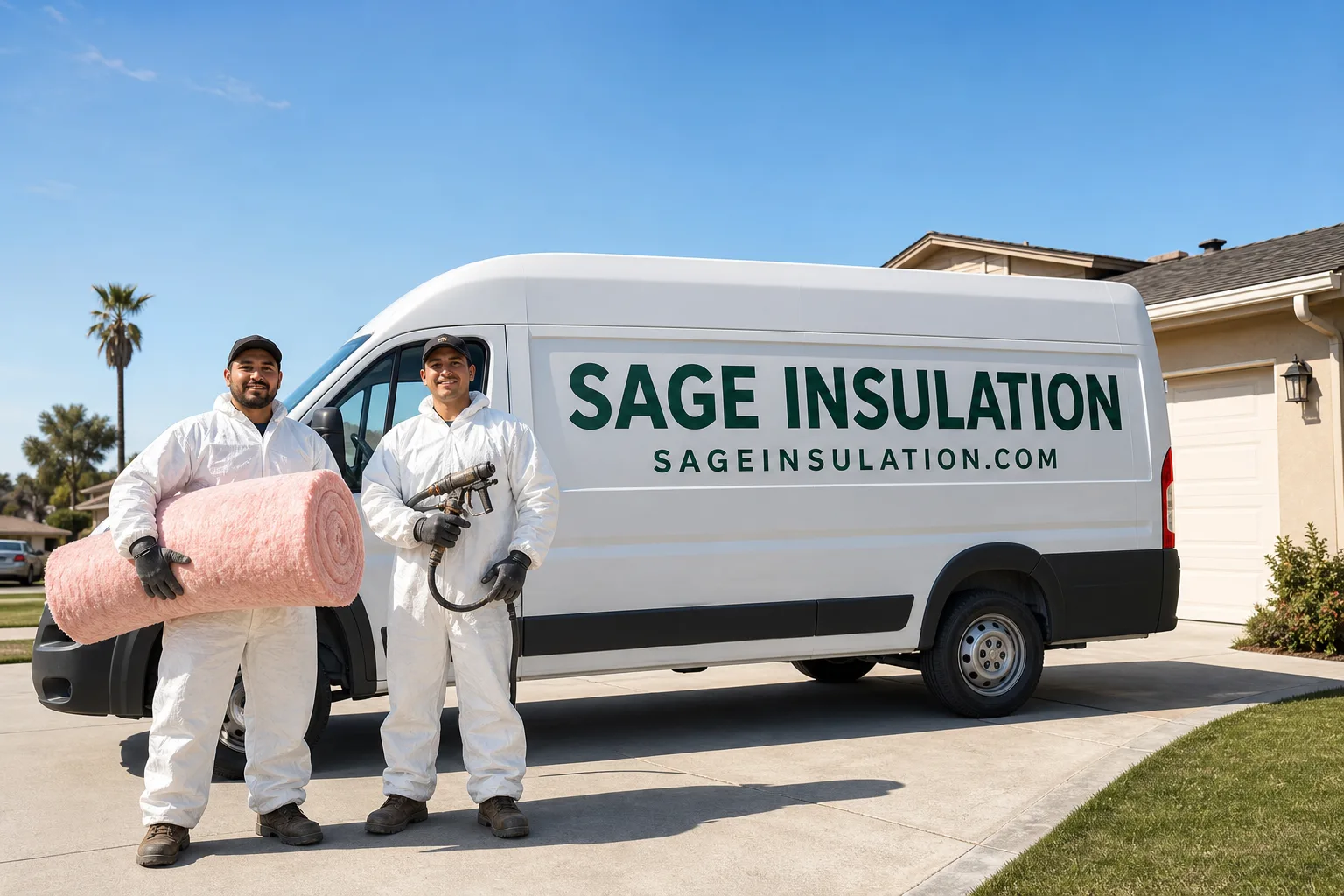
Fast, Reliable Spray Foam Insulation Across Lawndale
Spray foam insulation in Lawndale does two jobs that fiberglass batts simply can’t: it stops air movement and it seals the building envelope. In a city like Lawndale, where the marine layer settles over the 90260 and 90261 flats most mornings, that air-sealing matters more than the R-value number on the can. We’re Sage Insulation, and we’ve spent years working inside the 1950s stucco tracts and mid-century raised foundations that define this town. If your attic sweats through fog season or your walls feel cold to the touch in January, call (855) 360-9333. We’ll tell you honestly whether spray foam is the right fix for your home, or whether something else makes more sense.
Why Sage Insulation Is Lawndale’s Preferred Spray Foam Insulation Company
We work in Lawndale constantly, not occasionally. Our crews know the difference between a tract home off Prairie Avenue that’s been untouched since 1958 and one near the 405 that’s had three generations of electrical work punched through the ceiling. That local knowledge changes how we prep the attic, where we air-seal first, and how thick we flash the foam. Homeowners across Lawndale have hired us for one reason more than any other: we don’t push a single product. We carry spray foam systems from Icynene and Demilec, plus Johns Manville fiberglass and Rockwool mineral wool, so the recommendation you get reflects what your house actually needs. Alan Herrera runs our crews, and he’d rather lose a bid than sell foam to a house that needs blown-in cellulose instead.
Response time to Lawndale is usually same-week for estimates and scheduling. For attics with active moisture problems, we can often get a crew out within a few days. Our material-agnostic approach means we diagnose before we quote. That’s not a sales tactic. It’s just how insulation should be done.
Spray Foam Attic Insulation in Lawndale
Spray foam attic insulation in Lawndale solves a problem that’s specific to this stretch of the South Bay: fog-season condensation on roof decking. Most Lawndale homes were built in the 1950s and 1960s with paper-backed fiberglass batts laid between ceiling joists. Those batts were never meant to stop air movement. Decades of HVAC retrofits, attic fans, and electrical work have compressed them, punched gaps through them, and left the ceiling envelope leaking conditioned air into the attic. When that warm air hits the cool deck on a damp morning, the moisture condenses and soaks into the wood. Closed-cell spray foam, flashed against the underside of the roof deck, creates an air and vapor barrier that stops that cycle. In Lawndale’s mild climate, that’s the real benefit. R-value is secondary. Keeping the deck dry is what matters.
Attic spray foam in Lawndale typically runs $2,800 to $5,400 for a standard 1,000 to 1,500 square foot attic, depending on whether you’re flashing the roof deck or insulating the ceiling plane. Open-cell foam costs less per board foot but underperforms in Lawndale’s damp coastal air unless paired with a separate vapor retarder. We’ll explain the difference when we walk your attic.
Closed-Cell Roof Deck Flashing
When we flash closed-cell foam against the underside of the roof deck, we’re creating an unvented attic assembly. That’s the right call for many Lawndale homes where condensation is the primary enemy. Two inches of closed-cell at R-7 per inch stops both air and vapor, and it stiffens the roof structure in older tracts. Homeowners off 190th Street and Inglewood Avenue often see the ceiling cavities finally dry out after years of fog-damp decking.
Ceiling Plane Sealing
The alternative is sealing the ceiling plane, not the roof deck. This keeps the attic vented while air-sealing all top plates, wire penetrations, and can-light gaps with foam, then topping the ceiling with blown fiberglass or cellulose. It’s less expensive and often the better fit for Lawndale homes with gable vents and functioning soffit airflow.
Spray Foam Wall Insulation in Lawndale
Spray foam wall insulation in Lawndale is usually installed during a remodel or a room addition, because the original 1950s stucco walls on these tract homes were built with no insulation at all, or at best a thin fiberglass batt that’s long since settled. We see this constantly in the raised-foundation tracts east of Hawthorne Boulevard: exterior walls that feel like they’re radiating cold on winter evenings because the stud bays are empty. Foam injected into the wall cavities, or sprayed during an open-wall remodel, turns those hollow walls into air-sealed, insulated assemblies. For Lawndale’s marine-layer humidity, we prefer closed-cell in exterior walls. It acts as a vapor barrier, which matters when the outside air is damp for half the year.
Wall spray foam for an average Lawndale home typically runs $3 to $7 per square foot of wall area, with full-exterior wall retrofits for a 1,200 square foot home landing between $4,500 and $8,000. Room additions and re-roof projects create irregular framing transitions that need careful foaming to bridge the gaps, and that’s where a brand-agnostic installer saves you money. We pick the right foam for the gap, not the other way around.
Open-Wall Retrofit Foam
During a gut remodel or addition, we spray open-cell or closed-cell foam directly into the exposed stud bays. This is the cleanest application. It gives full coverage and lets us seal every framing transition, which matters in Lawndale homes where additions don’t always line up square with the original framing.
Injection Foam for Existing Walls
For walls that aren’t being opened up, we can drill and inject slow-rise foam into the stud cavities. It’s a slower process and it works best when we can verify the cavity is clear. In 1950s stucco construction with diagonal bracing and fireblocking, we’re careful to map the cavity before injecting. Done right, this stops the cold-wall feeling without tearing out drywall.
Trusted Brands We Service in Lawndale
We install spray foam systems from Icynene and Demilec, and we stock complementary products from Johns Manville, CertainTeed, and Rockwool for hybrid assemblies. That matters in Lawndale because a roof-deck foam job often needs a blown fiberglass top layer to hit the target R-value without overspending on foam thickness. When we quote your attic, we’re choosing from real product lines we install every week. If a home off Manhattan Beach Boulevard needs a mineral wool fire break around a furnace flue, we have Rockwool on the truck. If the ceiling plane needs blown-in fiberglass over spray foam sealing, we’re pulling Johns Manville or CertainTeed product. No special orders. No waiting on a distributor. That’s the advantage of carrying eight brand lines instead of one.
Common Spray Foam Insulation Problems We See in Lawndale Homes
- Compressed 1950s batts no longer insulating anything. Original paper-backed fiberglass loses loft after decades of foot traffic, rodent activity, and retrofits. By the time we see these Lawndale attics, the batts are often flat as cardboard and doing nothing but holding dust.
- Marine-layer condensation on roof decking. Warm air leaking through ceiling gaps meets the cool deck on foggy mornings and condenses. In the older tracts near the 405, this shows up as dark staining on the plywood and rust on nails pulling through the deck.
- Moisture held against framing by thin open-cell foam. Open-cell sprayed too thin in Lawndale’s damp coastal air can absorb fog-season moisture and hold it against the sheathing. That’s a mold invitation. We spec closed-cell or a proper vapor assembly whenever moisture is the primary concern.
- Gaps at room-addition framing transitions. Lawndale’s post-war tracts have had decades of additions stitched on. Where the new roof ties into the old, or where a wall was bumped out, the insulation envelope breaks. Spray foam bridged across these transitions is the only material that seals them permanently.
Pricing for Spray Foam Insulation in Lawndale, CA
Here’s what you can expect to pay in Lawndale’s market. Closed-cell spray foam runs $1.80 to $3.20 per board foot installed. Open-cell runs $0.70 to $1.40 per board foot. A typical 1,200 square foot attic flashed with two inches of closed-cell against the roof deck lands between $3,200 and $5,800. Wall retrofits run $3 to $7 per square foot of wall area. What moves the number: access (crawlspace attics in the older tracts are tight), prep work (removing degraded batts, air-sealing top plates), and whether we’re adding a blown insulation top layer. We give free estimates with a full attic walk. Call (855) 360-9333 and we’ll get you real numbers for your house, not a generic range.
We Also Serve Cities Near Lawndale
Our Spray Foam Insulation crews work throughout the South Bay. In addition to Lawndale, we regularly install in Hawthorne, Del Aire, Alondra Park, and Inglewood. Same crews, same brands, same material-agnostic approach. If you’re a few blocks over the city line, we’re still your local crew.
Serving Lawndale, CA — Our Local Coverage Area
We’re based in the Lawndale area and know this community well. Use the map below to see our service coverage — if you’re nearby, we can almost certainly help.
FAQs About Spray Foam Insulation in Lawndale
Closed-cell foam is a vapor barrier as well as insulation. In Lawndale’s coastal climate, the condensation risk from fog-season air meeting warm attic interiors is the bigger failure mode than heat loss. The mild temperatures mean R-value is secondary. Keeping moisture out of the decking and framing is what prevents mold and rot in these 90260 and 90261 tracts. If your attic deck is sweating, closed-cell flashed against the roof deck is usually the right fix. Call (855) 360-9333 and we’ll inspect your attic to confirm.
Yes. Re-roofs and additions create irregular framing transitions that actually make spray foam more valuable, not less. Foam bridges the seams where old roof ties into new, where wall plates don’t align, and where decades of retrofits left gaps. We spray these Lawndale additions regularly. The foam conforms to whatever geometry is there.
It’s often the single most effective fix. Decades of HVAC and electrical work in Lawndale’s 1950s attics have left the ceiling envelope riddled with gaps around wire penetrations, unsealed top plates, and can lights. Spray foam is the only insulation that seals those gaps as it insulates, and it’s often more effective than trying to patch each hole with caulk. We air-seal the top plates and penetrations with foam or sealant, then spray the deck or ceiling plane depending on the assembly.
It can, if the wrong foam is applied in the wrong place or at the wrong thickness. Open-cell sprayed too thin in Lawndale’s coastal humidity can absorb and hold fog-season moisture. That’s why we typically recommend closed-cell for roof decks in this climate zone. Closed-cell is a true vapor barrier. Installed correctly, it keeps moisture out of the decking and framing entirely, which is what stops mold in these marine-layer attics. Call us for a free assessment at (855) 360-9333 and we’ll tell you straight what your attic needs.
No, and you shouldn’t. The old batts have to come out first. Spraying foam over compressed, dust-laden fiberglass creates an uneven substrate and traps the degraded material underneath. We vacuum out the original batts, inspect the decking and framing for moisture damage, air-seal the penetrations, and then spray. Leaving the old batts in place is a shortcut some contractors take and it creates exactly the moisture trap this FAQ is about. We don’t do that in Lawndale or anywhere else.
If you’re in Lawndale and your attic has been sweating through fog season, or your walls feel hollow and cold, call Sage Insulation at (855) 360-9333. We’ll walk your attic, show you what’s actually happening, and give you a straight answer on whether spray foam is the right fix. Free estimates, no pressure, and Alan Herrera’s crews do the work right the first time.
Written by Alan Herrera, Owner at Sage Insulation, serving Lawndale and the surrounding South Bay since he started building insulation crews for these exact 1950s tract homes.