
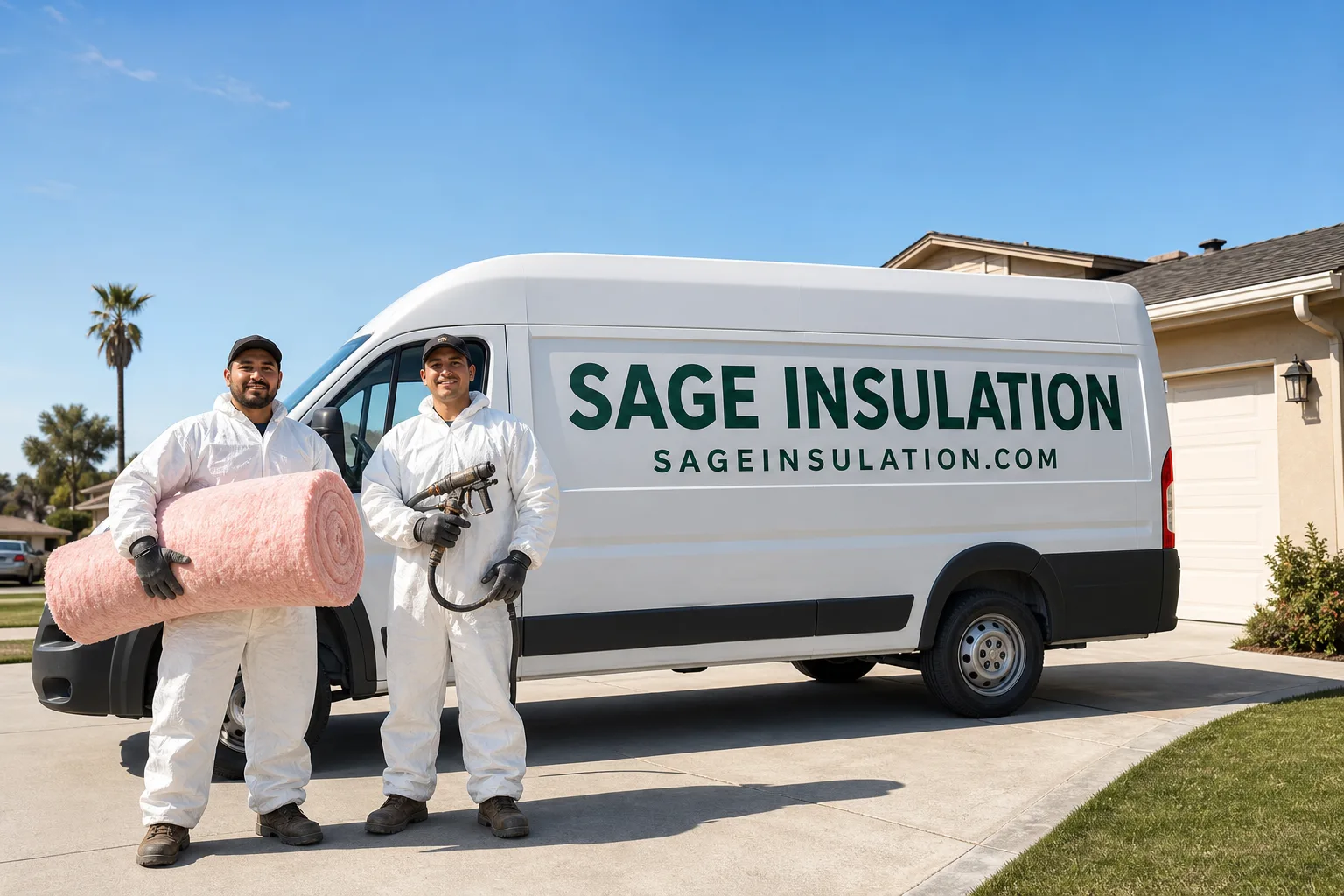
Fast, Reliable Spray Foam Insulation Across Temple City
Spray foam insulation in Temple City typically costs $2,800 – $6,400 for a full attic application and $4,500 – $9,800 for wall retrofits in an average postwar home. Most jobs are completed in one to two days, and Sage Insulation responds to Temple City service calls within 24 to 48 hours. If your rooms won’t hold temperature or your AC never shuts off between June and October, the problem is rarely the unit itself, it’s the attic above it. Call Alan Herrera at (855) 360-9333 for an honest assessment of what your home actually needs.
Why Sage Insulation Is Temple City’s Preferred Spray Foam Insulation Company
Temple City’s housing stock runs almost entirely to single-family tract homes built between the 1940s and 1970s. That means every job we take here involves retrofitting existing cavities, not spraying open stud bays in new construction. Our crews know the difference between a 1952 ranch on Las Tunas and a 1985 two-story rebuild off Rosemead Boulevard, because the approach to each is not the same. We’re material-agnostic, so we recommend against spray foam when blown-in cellulose would do the job better. That honesty is why Temple City homeowners keep referring us to neighbors on the same block.
We carry Owens Corning, Johns Manville, and Rockwool product lines alongside our Icynene and Demilec spray foam systems, which means we are never forced to sell a single solution. When a Temple City customer asks for open-cell foam, we can show them why closed-cell might make more sense for their crawlspace, then price both. Alan Herrera has built the company around that diagnostic-first approach.
Response time to Temple City from our Downey location runs 24 to 48 hours for estimates, and we schedule installations around your availability, not ours. Most attic jobs take one day; full wall retrofits run two to three. We leave the cavity cleaner than we found it.
Spray Foam Attic Insulation in Temple City
Spray foam attic insulation in Temple City is the single most effective upgrade for postwar tract homes losing conditioned air through unsealed ceiling penetrations and low-clearance rooflines. The local angle matters here. Temple City’s 1940s and 1950s homes often have attics so tight under low-pitch roofs that spray foam must be applied in multiple thin passes to avoid heat buildup and off-gassing, unlike the open, taller attics common in newer Inland Empire construction. A typical attic spray foam job in Temple City runs $2,800 – $6,400 depending on square footage and whether we’re sealing the roofline or the attic floor.
Roof Deck Sealing for Summer Heat Gain
Temple City sits at the foot of the San Gabriels in a hot-summer Mediterranean zone. Attic temperatures here routinely climb past 140 degrees from June through September. Applying closed-cell foam to the underside of the roof deck brings that attic into the home’s conditioned envelope, cutting the load on aging AC systems common to homes built before central air was standard.
Attic Hatch and Pull-Down Stair Sealing
Builder-grade attic hatches and pull-down stairs in Temple City’s 1980s and 1990s infill homes leak conditioned air constantly. Spray foam on the roof deck alone won’t stop heat gain unless the hatch is sealed and insulated. We include hatch treatment in every attic job here because skipping it defeats the point.
Spray Foam Wall Insulation in Temple City
Spray foam wall insulation in Temple City is most often requested for two scenarios: 1950s homes with empty wall cavities and garage conversions that were never insulated when the permit was pulled. The complication in this city is knob-and-tube wiring, which runs through the wall cavities of many pre-1960 homes. Original knob-and-tube wiring can be damaged or overheated if spray foam is applied without rerouting or isolating the wires first. We check for it before we quote, and we do not spray around live knob-and-tube. A wall retrofit in Temple City typically runs $4,500 – $9,800, with the higher end reflecting dense two-story rebuilds and homes requiring electrical work before insulation.
Garage Conversions and Additions
Garage conversions are common across Temple City’s fully built-out grid, and most were framed and drywalled without insulation. Closed-cell foam works well here because it adds structural rigidity and air sealing in a single pass. We apply it to the ceiling and the shared wall, then assess whether the original garage door opening needs a thermal break before it becomes a bedroom wall.
Dense-Pack Alternative for Historic Cavities
For Temple City homes where spray foam is not the right fit, our blown-in insulation capability lets us dense-pack cellulose into walls through small access holes. It’s a less invasive option for older plaster-over-lath interiors we see throughout the 91780 ZIP code, and it preserves original wall finishes.
Trusted Brands We Service in Temple City
Our Spray Foam Insulation team installs both Icynene and Demilec open- and closed-cell systems, which means we can match the foam chemistry to the cavity rather than forcing one product on every job. We also stock Owens Corning and Johns Manville fiberglass for hybrid projects where spray foam handles the air sealing and batts handle the cavity fill. Rockwool mineral wool rounds out the lineup for fire-rated assemblies in attached garages and additions. For Temple City customers, carrying multiple brands means the recommendation is driven by your home’s actual performance gaps, not by whatever is on the truck that week.
Common Spray Foam Insulation Problems We See in Temple City Homes
- Clogged soffit vents from the camphor canopy. Mature camphor and oak trees define Temple City’s street grid, and their debris clogs soffit vents and eave gaps every fall. Spray foam traps moisture in the attic if ventilation is not restored before sealing, so we clear and verify airflow first.
- Crushed radiant barriers from re-roofing. On a 1952 ranch off Las Tunas Drive, we found the original fiberglass batts tunneled by rodents and a radiant barrier that had been walked over and crushed during a re-roof. We removed the debris, sealed the soffit vents, and applied Icynene foam to the attic roofline, restoring R-value and stopping the summer heat gain that had been overwhelming the home’s aging AC.
- Knob-and-tube wiring in wall cavities. Homes built in the 1940s and 1950s throughout Temple City’s original tract carried electrical loads far lower than modern code. Spray foam around active knob-and-tube can overheat the conductors. We isolate or reroute before insulating, and we tell you the cost before we start.
- Pests inside deteriorated fiberglass. Rats and squirrels have had decades to tunnel through original attic insulation in Temple City’s older neighborhoods. Removing that contaminated material and air-sealing with foam eliminates both the nesting site and the entry path.
Pricing for Spray Foam Insulation in Temple City, CA
Spray foam pricing in Temple City reflects the retrofit reality of the local housing stock. Attic applications run $2,800 – $6,400, with the higher end covering full roof deck sealing on larger two-story rebuilds. Wall retrofits run $4,500 – $9,800 depending on cavity access, knob-and-tube remediation, and square footage. Garage ceiling spray foam runs $1,200 – $2,800. Rim joist sealing in crawlspaces runs $900 – $2,200. Every estimate is free and line-itemed, so you see the labor, material, and any electrical remediation separately before you commit. Call (855) 360-9333 for an exact quote on your home.
We Also Serve Cities Near Temple City
Sage Insulation’s Temple City service area extends into the surrounding San Gabriel Valley communities. We run crews regularly to North El Monte, Rosemead, San Gabriel, and Arcadia, often combining multiple jobs in the same day to keep scheduling tight for homeowners across the 91780 corridor. If you live just outside the city line, call us and mention your cross street, we’ll tell you the next available window.
Serving Temple City, CA — Our Local Coverage Area
We’re based in the Temple City area and know this community well. Use the map below to see our service coverage — if you’re nearby, we can almost certainly help.
FAQs About Spray Foam Insulation in Temple City
You can, but only after the knob-and-tube is isolated or rerouted, and we will not spray around live circuits. We inspect the walls before quoting, and if the wiring is still active, we bring in a licensed electrician to handle that portion, then insulate. The cost of electrical remediation is separate from the insulation line item and we tell you the number before any work begins. Call (855) 360-9333 and mention the wiring if you already know it’s there.
Spray foam makes more sense when the home has open framing or an attached garage conversion where air sealing matters as much as R-value. Blown-in insulation handles loose-fill attics well, but it cannot air-seal the ceiling plane the way closed-cell foam can. For 1980s rebuilds with vaulted ceilings and second-floor knee walls, foam often outperforms because it seals the irregular cavities that loose fill misses. We install both, so we will tell you which one fits without a vendor bias.
We apply foam in multiple thin passes. Low-pitch roofs leave attics with less than three feet of clearance in parts of Temple City’s original 1940s and 1950s tracts, and spraying too thick in one pass creates heat buildup and off-gassing. Our crews have experience working in those conditions, and we verify substrate temperatures between passes before continuing.
Yes, and we address it before spraying. Fallen camphor and oak debris clogs soffit vents and eave gaps throughout Temple City, and sealing the attic without restoring ventilation traps moisture against the roof deck. We clear the vents, confirm airflow, and only then apply foam. If the vents are undersized for the roof area, we may recommend adding ventilation as part of the scope.
The best approach is closed-cell foam on the ceiling and the shared wall, plus an insulated thermal break where the original garage door opening meets the room. Most unpermitted or builder-grade garage conversions in Temple City were framed and drywalled with no insulation at all, and they leak air around the old door header and side jambs. A typical garage ceiling and wall application runs $1,200 – $2,800 for the ceiling and $2,400 – $4,800 for walls, depending on whether we need to remove drywall to access the cavities. Call (855) 360-9333 and Alan Herrera will walk you through the scope.
Written by Alan Herrera, Owner at Sage Insulation, serving Temple City and the San Gabriel Valley since founding the company in Downey.